
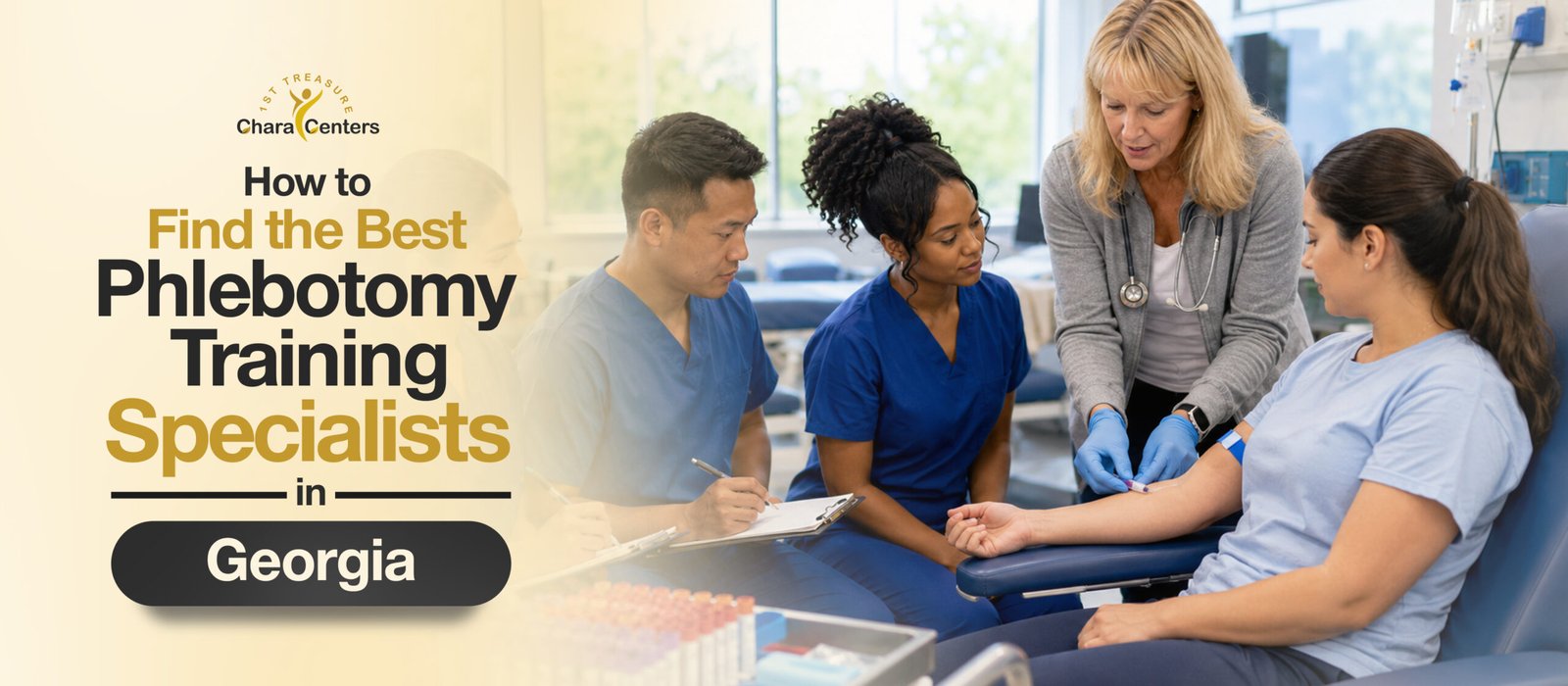
How to Find the Best Phlebotomy Training Specialists in Georgia
July 24, 2026
Two phlebotomy programs can look almost identical on paper. Both promise certification preparation, hands-on training, and experienced instructors. Yet graduates from one program leave confident enough to start drawing blood on day one, while others spend their first weeks on the job learning what should have been taught in class.
Finding the best phlebotomy training specialist in Georgia isn’t about picking the first school that fits your budget. It’s about knowing what separates quality training from good marketing.
What Makes a Phlebotomy Training Specialist the Right Choice?
Every school’s homepage says the same thing: “hands-on training,” “experienced instructors,” “career support.” What you need to know is what’s actually happening in the lab and on the clinical floor.
The best phlebotomy training in Georgia teaches you the science behind what you’re doing. They give a needle in your hand enough times that your body remembers the technique under pressure. It connects you to a clinical site where real supervisors watch you work before an employer ever does.

Learning what a phlebotomist is and the responsibilities involved can help you recognize whether a school’s curriculum covers the skills employers expect.
Accreditation and Program Reputation
Georgia doesn’t license phlebotomists at the state level. But employers still lean hard on national certification, and a program’s accreditation status decides whether you’re eligible or not.
Before enrolling, verify that the program meets the eligibility requirements for the certification exam you plan to take. Some training programs may not provide the coursework, clinical experience, or documentation required by organizations such as NHA, ASCP, NCCT, or AMT.
When researching phlebotomy training specialists in Georgia, look beyond the school’s own marketing materials. Compare program details, graduate reviews, clinical training information, and certification outcomes to understand the quality of training you will receive.
A pattern across dozens of graduates, praising the clinical hours, or repeatedly complaining about a rushed lab schedule, tells you the truth. A program earns its reputation through the people it graduates, not through the ad copy it writes.
Experienced Healthcare Instructors
An instructor who’s spent years in a hospital lab or a busy physician’s office has seen situations a textbook skips. The patient who faints, the vein that blows on the second try, the toddler who won’t hold still. That kind of knowledge doesn’t show up in a textbook. It shows up in how calmly your instructor talks you through your own first mistakes.
Before you enroll with any phlebotomy training specialists in Georgia, ask: where has this instructor worked, and are they still connected to a clinical setting?
A teacher who left bedside care a decade ago teaches differently than one who drew blood last month to deliver the best phlebotomy training in Georgia.
A Comprehensive Curriculum
The strongest phlebotomy programs in Georgia build their curriculum around what a working phlebotomist needs.
That means real coverage of:
- Anatomy and physiology as it relates to blood collection
- Medical terminology used in lab and chart documentation
- Infection control and OSHA safety standards
- Venipuncture and capillary puncture technique
- Specimen labeling, handling, and transportation
- Patient identification protocols
- HIPAA compliance and medical ethics
- Professional communication with patients and clinical staff.
Critical Fact: A mislabeled collection tube or skipped patient identification step can send the wrong lab result to a patient’s chart. It is one of the most common preventable errors in outpatient care, and it is entirely a training problem when evaluating the best phlebotomy training in Georgia.
Hands-On Clinical Training
Repeated, supervised practice is what turns a memorized procedure into a skill your hands trust under stress. It’s also what teaches you to adjust, because a scared or nervous patient needs a completely different approach than a calm patient.
When you’re comparing phlebotomy training specialists in Georgia, ask one simple question: how many supervised blood draws will I complete before I graduate? If the answer isn’t clear, consider it a warning sign.
A quality phlebotomy program combines classroom instruction with extensive clinical practice to prepare students for real healthcare environments. See how a phlebotomy training program prepares you for high-demand phlebotomy jobs before making your decision.
A program confident in its training will give you several characteristics of the best phlebotomy training in Georgia.
Externship Opportunities
Working inside a hospital lab or an outpatient clinic exposes you to patient volume, pressure, and the unwritten rules of a clinical team. It also helps you figure out where you actually want to work. Some students prefer to work in a fast hospital lab; others prefer the slower pace of a small clinic.
Before enrolling anywhere with phlebotomy training specialists in Georgia, ask these questions directly:
- Is a clinical externship built into the program, or is it optional?
- Which hospitals, labs, or clinics does the school partner with?
- How many clinical hours will I complete?
- Will I perform supervised blood draws on real patients before graduation?
More clinical exposure before graduation means less anxiety on your actual first shift while undergoing the best phlebotomy training in Georgia.
Certification Exam Preparation

Finishing class and passing a national certification exam are two different milestones. Employers across Georgia care far more about the second one. The U.S. Bureau of Labor Statistics also notes that employers may prefer candidates who have earned professional certification.
A program that takes certification seriously builds exam prep directly into your training. Instead of leaving you to study alone afterward.
Look for:
- Structured exam review sessions
- Practice tests that mirror the real exam format
- Mock practical skills assessments
- Clear guidance on which certifying body fits your goals (NHA, ASCP, NCCT, or AMT)
- Instructor support in the weeks leading up to test day
Ask the school directly what percentage of their graduates pass on the first attempt. A program proud of its outcomes will tell you the number without hesitation as part of the best phlebotomy training in Georgia.
Flexible Scheduling and Student Support
A flexible schedule should make training easier, not reduce its quality. Students should receive the same level of instruction, hands-on practice, and instructor support regardless of when they attend classes. Ongoing guidance can make the transition from student to healthcare professional much smoother.
Look for:
- Day, evening, or weekend class options
- Makeup sessions for missed labs
- Small class sizes that keep instructor attention high
- Support that continues through graduation, not just through enrollment
What Does Phlebotomy Certification Cost in 2026?
Understanding the overall financial commitment prevents unexpected out-of-pocket expenses later:
| Expense Category | Estimated Cost Range | What It Covers |
|---|---|---|
| Program Tuition | $900 – $2,500+ | Classroom instruction, hands-on lab supplies, and coursework. |
| National Exam Fees | $120 – $160 | Direct fee paid to certifying bodies (e.g., NHA CPT exam ~$125, ASCP ~$145–$155). |
| Supplies & Books | $50 – $150 | Textbooks, scrubs, and basic practical clinical tools. |
If you’re comparing different schools, our complete guide to Phlebotomy certification cost in 2026. It explains tuition, exam fees, and other expenses in greater detail, making it easier to budget before enrolling.
Is Phlebotomy Certification Worth It?
If Georgia doesn’t require a state license, you might wonder if Phlebotomy certification is worth the investment. So, the answer is yes.
- Employment Requirement: Over 85% of hospitals, diagnostic laboratories (like Quest or Labcorp), and major clinic systems in Georgia strictly require candidates to be nationally certified or board-eligible upon hire.
- Earning Potential: Certified phlebotomists earn higher starting wages than non-certified peers. The national median hourly pay sits around $20.99 to $21.50/hr ($43,660+ annually), with specialized or hospital-based technicians earning up to $57,000+.
- Career Outlook: Phlebotomy continues to be a strong entry point into healthcare. The U.S. Bureau of Labor Statistics projects 6% employment growth for phlebotomists between 2024 and 2034, which is faster than the average for all occupations. The agency also estimates about 18,400 job openings each year, driven by growing demand for laboratory testing and workforce turnover
Quick Comparison: Types of Phlebotomy Training Programs in Georgia
Each training option offers different benefits. So, compare program structure, clinical experience, and scheduling flexibility. This helps you find the program that best fits your career goals.
| Training Option | Best For | Advantages | What to Look For |
|---|---|---|---|
| Private Healthcare Schools | Career changers seeking fast, focused training | Hands-on focus, flexible schedules, fast completion | Ensure total fees (lab supplies, uniforms, books) are clear upfront. |
| Community & Technical Colleges | Students preferring traditional academic pacing | Lower tuition per credit, structured semester tracks | Takes 1–2 full semesters to complete. |
| Hybrid Programs | Working adults balancing tight schedules | Online lectures combined with in-person lab sessions | Clinical stick practice must be completed in person. |
Expert Tip: A shorter program isn’t always the better program. Employers remember graduates who perform confidently and safely, not those who finished a few weeks earlier.
Not sure which program fits your goals? Speak with an admissions advisor to learn more about class schedules, clinical training, certification preparation, and enrollment requirements.
Questions to Ask Before You Choose a Training Provider
The answers you get in a five-minute phone call reveal more than an entire brochure.
Accreditation:
- Is this program accredited or formally recognized by an outside body?
- Which national certification exams does this program prepare students for?
Clinical Training:
- How many hands-on practice hours are built into the program?
- Is an externship guaranteed, or dependent on availability?
- How many supervised blood draws should I expect before graduation?
Career Support:
- Does the school help with resumes and interview preparation?
- Do local hospitals, labs, or clinics actively hire your graduates?
- What support is available after I finish the program?
Asking these questions does two things. Firstly, it gives you data to compare schools on. Secondly, it tells the admissions team you’re serious, which tends to get you straighter answers.
Community Insights
Many graduates say they gained the most confidence during hands-on labs and clinical training. They recommend choosing a program that offers plenty of supervised practice instead of focusing only on how quickly the course can be completed. Consistent practice and experienced instructors make a lasting difference once you begin working with patients.
Ready to Start Your Phlebotomy Training?
The best Phlebotomy training specialist in Georgia isn’t always the least expensive or the fastest. It’s the one that prepares you to succeed after graduation. Compare programs carefully, ask the right questions, and choose a school that invests in your clinical skills, certification readiness, and long-term career.
At 1st Treasure Chara Centers, our Phlebotomy technician program is built around exactly what this guide covers. Accredited curriculum, real supervised clinical hours, certification exam preparation, and instructors who’ve worked on the healthcare floor.
If you’re comparing phlebotomy training specialists in Georgia and want a program that gets you clinically confident, reach out to us and ask the same questions from the checklist above. We’d rather earn your enrollment by answering them honestly than by outspending anyone on advertising.
Frequently Asked Questions
How do I choose the best Phlebotomy training specialist in Georgia?
Compare accreditation, instructor experience, clinical hours, externship guarantees, certification prep, and career support side by side. Tuition alone tells you almost nothing about training quality.
What should a quality phlebotomy program include?
Classroom instruction in anatomy and safety, supervised lab practice, infection control training, venipuncture and capillary technique, specimen handling, and dedicated certification exam prep. Clinical experience should be a core requirement, not an add-on.
How much hands-on training should I expect?
Enough supervised practice that you can perform a blood draw confidently before your externship begins. If a school won’t give you a specific number of practice hours, ask again until they do.
Does Georgia require phlebotomy certification?
Georgia doesn’t require state licensure for phlebotomists. That said, most hospitals, labs, and clinics prefer or require a nationally recognized certification, which makes exam-focused training worth prioritizing.
Can I complete phlebotomy training online?
Portions of the classroom instruction can happen online, but the hands-on lab work and clinical practice have to happen in person. There’s no substitute for a real needle and a real vein when you’re building the skill.
Latest Posts
August 13, 2024
Is the Role of a CNA the Same as That of a Nurse?
August 13, 2024
Phlebotomists: Vital Contributors to the Healthcare System

August 13, 2024