

Corporate Training Programs for OSHA Compliance: A Practical Guide for Safer Workplaces
September 7, 2026
Most employees do not think about workplace safety while everything is going normally. They get through the shift, finish their work, answer emails, see patients, move inventory, operate equipment, or handle customers, and go home.
Then something happens, and a coworker falls. A worker becomes unresponsive in the break room. Suddenly, knowing where the first-aid kit is matters. Knowing who can perform CPR matters. Knowing how to use the AED matters too. This is the part of workplace safety that a policy manual cannot handle by itself.
Employees need training that connects with the work they actually do. For businesses in Georgia and across the United States, corporate training programs can include OSHA-related education, emergency response, CPR, first aid, AED use, and other safety subjects. The mix will look different from one workplace to another because a medical facility, warehouse, construction company, and office do not face the same risks. That difference is worth keeping in mind before choosing a training course.
What Do Corporate Training Programs Include?
There is no single course called “workplace safety training” that covers everything an employer may need. Corporate training programs can bring several types of education together. Depending on the business, employees might receive training related to workplace hazards, personal protective equipment, emergency procedures, bloodborne pathogens, hazardous chemicals, CPR, first aid, AED use, or job-specific safety practices. The important word here is job-specific.
A receptionist and a maintenance technician may work for the same company, but their exposure to workplace hazards can be completely different. A nurse and an accounting employee can also have very different responsibilities during an emergency.
OSHA’s training resources explain that employers have responsibilities to train workers who face workplace hazards. The exact training required depends on the hazards and OSHA standards that apply. That makes a needs-based approach much more useful than simply sending everyone through the same course.
Look at the Workplace Before Choosing the Course
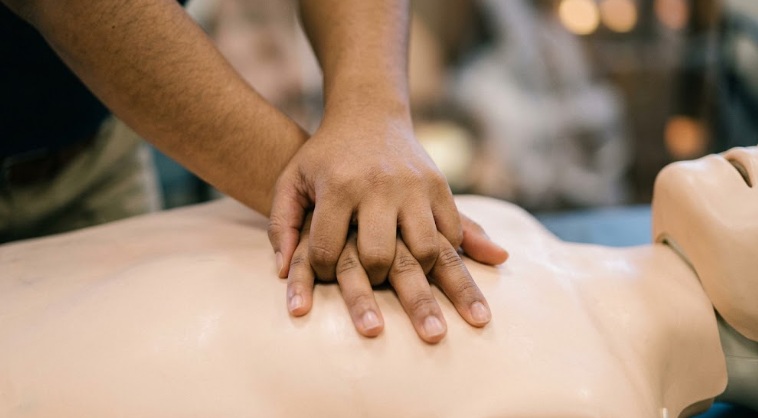
It is tempting to start with a training catalog. There are plenty of courses available, and many of them sound useful. The better starting point, however, is the workplace itself.
Consider what employees actually encounter during their shifts. Do they handle chemicals? Work with machinery? Lift heavy materials? Come into contact with blood or other potentially infectious materials? Work at heights? Provide direct patient care? Spend time around the public? Even the layout of a workplace can matter.
Where are the emergency exits? Where is the AED? Who is likely to reach an injured employee first? How long might it take for professional medical help to arrive? These questions give employers a much clearer picture of where training is needed.
For example, an office with dozens of employees may benefit from having trained first-aid and CPR responders even if most workers have relatively low physical risk. A healthcare facility may need more extensive training because employees are dealing with patients, medical equipment, and potential exposure risks every day. Training should reflect those realities.
OSHA 10 vs. OSHA 30: Where Do They Fit?
OSHA 10 and OSHA 30 are familiar names, particularly in industries where workplace hazards are a major concern. Both are part of OSHA’s Outreach Training Program. The 10-hour course generally provides basic awareness for entry-level workers, while the 30-hour course is designed for workers who have greater safety responsibility. There is an important distinction, though.
Completing an OSHA Outreach course does not mean an employee has completed every OSHA training requirement that could apply to their job. OSHA describes the Outreach program as voluntary, and an Outreach card is not an OSHA certification or license.
In other words, an OSHA 30 card does not suddenly cover every chemical, bloodborne pathogen, machinery, or emergency-response requirement in a workplace. OSHA explains the purpose and limitations of these courses through its OSHA Outreach Training Program.
Employers can also review the OSHA Outreach FAQ before deciding where Outreach training fits into their broader safety program.
What Safety Training Does Your Workforce Actually Need?
There is no universal safety-training package for every organization. The right program depends on workplace hazards, employee responsibilities, emergency procedures, and applicable requirements. However, emergency-response education can be an important part of a broader preparedness strategy.
CPR Training
For many employers, corporate training programs are where CPR and other emergency-response skills become part of a broader workplace safety plan.
Cardiac emergencies do not wait for someone to be at home. They can happen at work, during a meeting, in a parking lot, or in a break room. When an employee collapses, the people already nearby may have to act before emergency responders arrive. That is where CPR training can be valuable.
Employees can learn how to recognize cardiac arrest, begin CPR, respond to an emergency, and use an automated external defibrillator. For healthcare workers, the appropriate course may be BLS or another level of training based on their professional role. The key is matching the course to the people taking it.
A corporate office does not necessarily need every employee trained at the same level. A healthcare organization may have different expectations because its staff routinely deal with patients and medical emergencies.
Georgia employers working with healthcare personnel can learn more about what healthcare workers need before enrolling in CPR certification in Georgia.
AED Training
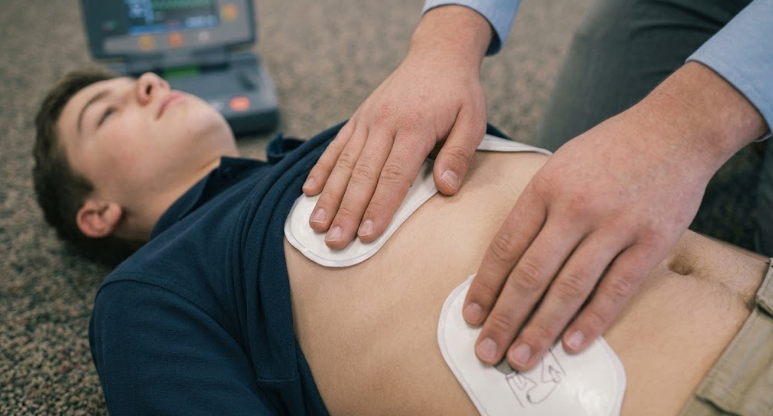
Many workplaces have an AED somewhere in the building. The problem is that “somewhere in the building” is not particularly helpful when someone has collapsed.
Employees who may respond during an emergency should know where the device is located and how it is used. An AED gives spoken instructions during operation, but employees are still better prepared when they have seen the equipment before an emergency occurs.
Training also gives people an opportunity to become familiar with the sequence of responding to an unresponsive person rather than trying to understand everything for the first time under pressure.
For companies that include AED instruction within their workplace education, pairing it with CPR training can make the AED training more practical because the two skills are often used together during a cardiac emergency.
First Aid Training
Workplace emergencies are not limited to cardiac arrest. Someone can burn a hand, suffer a cut, fall, develop a sudden medical problem, or begin choking during lunch. These events may sound ordinary, but ordinary emergencies still require an appropriate response.
First Aid training gives employees a foundation for dealing with injuries and medical situations while professional help is being arranged.
Choking is one example. An employee who has never learned the appropriate response may hesitate or panic. Someone who has practiced the steps has a much better starting point.
Employers can also review this practical guide to first aid for choking emergencies. OSHA addresses workplace first-aid arrangements in 29 CFR 1910.151. The standard includes requirements concerning medical services and first-aid supplies in certain workplaces where medical attention is not in close proximity.
Why Practical Training Matters for Health and Safety Compliance
There is a difference between recognizing the words “chest compressions” and actually knowing what to do when another person is unconscious. That difference is one reason hands-on instruction matters.
CPR, AED use, and first aid are physical skills. Employees need to become familiar with the actions involved, not just read about them. Practicing can also reveal where someone is uncertain, giving the instructor an opportunity to correct the problem before the skill is needed in a real emergency. This matters when a company is working toward stronger health and safety compliance.
The training should leave employees with something they can use. A certificate may document that someone completed a course, but it does not replace the value of actually understanding the procedure.
For employers interested in what practical CPR instruction can include, this guide covers several of the essential skills taught in quality CPR training. The strongest corporate training programs combine the information employees need with enough hands-on practice to make the response feel familiar.
Should Every Employee Receive the Same Training?
Not necessarily. In fact, giving every employee identical training can sometimes make the program less useful.
A warehouse worker may need instruction related to equipment, lifting, falls, and other physical hazards. Someone working in an administrative role may have different needs. A healthcare employee may require training related to bloodborne pathogens and patient-care responsibilities.
The employee’s position is only one part of the picture. Employers should also consider:
- What hazards the employee encounters
- What tasks the employee performs
- Whether the employee has an emergency-response role
- Which OSHA standards apply
- Whether state requirements affect the position
- Whether a professional license or certification has separate requirements
- Whether workplace conditions have changed
This approach keeps training connected to the people who are actually expected to use it.
Where Do EMT Courses in GA Fit?
EMT courses in GA are another area that can cause confusion. EMT education is designed for people pursuing emergency medical careers. It is considerably different from sending employees to a workplace CPR or first-aid class.
Georgia’s EMS system includes several levels of licensure, including Emergency Medical Responder, EMT, Advanced EMT, and Paramedic. The Georgia Department of Public Health provides information about EMS personnel licensure and the state’s licensing process.
So, if an employee wants to become an EMT, an EMT program may be the appropriate career path. If the employee simply needs emergency-response skills for their current workplace, an EMT program would usually be far more extensive than necessary. Those are two different goals. Employees interested in healthcare careers can also explore other entry-level healthcare career options.
When Should Employees Be Retrained?
A training plan should not be frozen forever. Workplaces change, new equipment arrives, or employees move into different positions. A company begins using a new chemical, and procedures are updated. Sometimes an incident exposes a gap that nobody noticed before. Any of those changes can affect training needs.
Some OSHA standards also specify particular training requirements. Under OSHA’s Bloodborne Pathogens Standard, employees with occupational exposure must receive training initially and at least annually, with additional training in certain circumstances when changes affect their exposure.
Hazard Communication has its own requirements. Employees must receive information and training at the time of initial assignment and when a new chemical hazard is introduced into their work area.
That is why training reviews should happen when something meaningful changes, not only when someone notices that an old certificate has reached its date.
Building a Corporate Training Program Without Making It Complicated
A useful program starts with a fairly simple question: What do our employees need to know to perform their jobs safely? From there, employers can work through the practical details.
Identify the hazards
Look at the actual work environment and the tasks employees perform. Pay attention to hazards that may be easy to overlook during a normal day.
Group employees according to their responsibilities
Training can be organized around roles instead of forcing everyone through exactly the same material.
Separate general education from specific requirements
An OSHA Outreach course can provide useful safety awareness, but employers should still identify any training required by specific OSHA standards or other applicable rules.
Add emergency-response skills where appropriate
CPR, AED, and first aid can give employees useful skills when they may be among the first people responding to an emergency.
Review the program when the workplace changes
New equipment, new chemicals, new procedures, incidents, and changes in job duties can all be reasons to revisit training.
Keep clear training records
Records help employers know who completed which course and when. They also make it easier to identify employees who need refresher or additional training.
The administration matters, but it should never become more important than whether employees actually understand the material.
Choosing the Right Corporate Training Provider
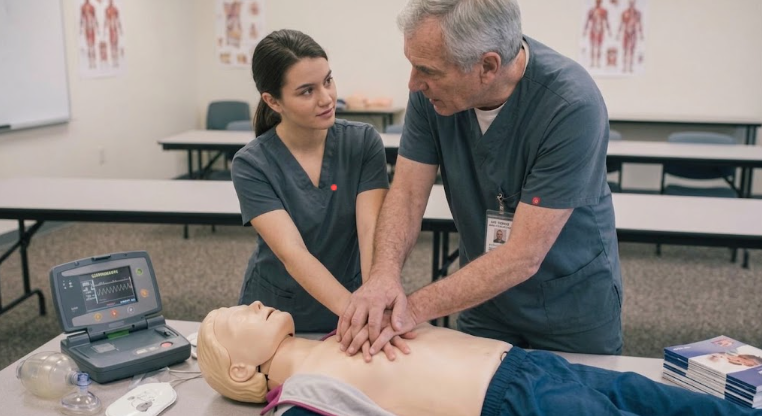
When comparing providers, employers should look for corporate training programs that fit their actual workplace needs rather than simply choosing the longest or most widely advertised course. Price is a significant part of the decision, particularly when a company is training a large group. It should not be the only question.
Ask what the course actually teaches. Find out whether employees will receive hands-on practice when the subject calls for it. Check the instructor’s qualifications. Ask whether the provider offers group sessions and what documentation employees receive after completion. Most importantly, ask what the course doesn’t cover.
For Georgia employers, it can also make sense to work with a provider familiar with healthcare education when employees include CNAs, medication aides, phlebotomists, or other healthcare personnel. Choosing a provider that understands these workplace differences can support stronger health and safety compliance without giving employees training that has little connection to their actual roles.
Final Thoughts
Workplace safety is easier to understand when it is connected to real people doing real jobs. The warehouse worker needs training that makes sense for a warehouse. The healthcare employee needs education that reflects patient care and exposure risks. The office worker may need a different combination of emergency and safety instruction.
There is no reason to make the process more complicated than it needs to be. Begin with the work being performed. Identify the hazards. Look at the OSHA requirements that apply. Then decide where CPR, AED, first aid, or other education belongs.
For Georgia organizations, corporate training programs can bring those pieces together while giving employees skills that have a practical purpose beyond completing another course. 1st Treasure Chara Centers provides healthcare-focused training for organizations and individuals looking to build practical emergency-response and healthcare skills.
Frequently Asked Questions about Corporate Training Programs
Does OSHA 10 make a company OSHA compliant?
No. OSHA 10 is part of the voluntary Outreach Training Program and provides general occupational safety awareness. It does not automatically satisfy every OSHA training requirement that may apply to a particular workplace.
What is the difference between OSHA training and CPR/first aid training?
OSHA training focuses on workplace hazards and applicable safety requirements. CPR and first aid training focuses on responding to medical emergencies. Depending on the workplace, employees may need one, the other, or both.
Are EMT courses in GA required for workplace emergency preparedness?
No. EMT education is professional healthcare training. Most employees who need basic emergency-response skills do not need to complete an EMT program simply to respond appropriately to workplace emergencies.
How often should workplace training be repeated?
It depends on the subject and the requirements that apply. Some OSHA standards specify particular training intervals. Other training may need to be revisited when workplace conditions, equipment, hazards, procedures, or employee responsibilities change.
Is online training enough for every safety subject?
Not always. Some topics can be taught effectively online, but physical skills such as CPR, AED use, and certain first-aid procedures benefit from hands-on practice. The format should match the skill being taught.
Latest Posts
August 13, 2024
Is the Role of a CNA the Same as That of a Nurse?
August 13, 2024
Phlebotomists: Vital Contributors to the Healthcare System

August 13, 2024