

Infection Control Skills You’ll Learn in CNA Training Near Woodstock
September 29, 2026
There is a side of CNA work that does not always get much attention. It has little to do with taking vital signs or helping someone walk. It is knowing how to keep germs from moving around. A CNA may help one patient with bathing and then assist another with meals. Between those two tasks, proper hygiene can make a real difference. That is where infection control comes in. It becomes part of the way a CNA approaches routine care.
People researching CNA training near Woodstock will encounter these practices early in their preparation. They are not just classroom material. They are skills used throughout a normal shift.
Why Is Infection Control Important for CNAs?
Think about how often a CNA touches something during a shift. There are bed rails, clothing, linens, equipment, door handles, and plenty more. Patients are also part of that equation. Some may have open wounds or weakened immune systems. Others may simply need extra protection because of their age. Good infection-prevention habits help reduce unnecessary exposure.
During training, future CNAs become familiar with practices such as:
- Cleaning hands before and after appropriate patient contact
- Selecting PPE based on the task
- Keeping clean supplies away from contaminated materials
- Cleaning shared equipment correctly
- Handling used linens without spreading contamination
- Disposing of used materials according to facility procedures
These steps may seem simple. During a busy shift, however, knowing when and how to use them becomes just as important as knowing what they are.
7 Infection Control Skills Every CNA Student Should Practice
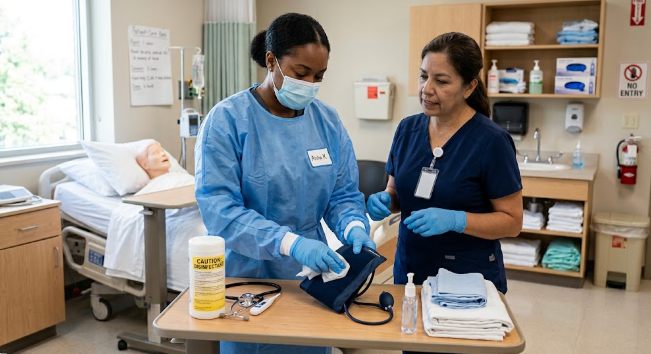
CNA training gives students opportunities to practice infection prevention skills in realistic care situations. Here are seven areas that deserve attention.
1. Hand Hygiene That Goes Beyond a Quick Wash
Handwashing seems straightforward until patient care comes into play. There are specific moments when hand hygiene becomes essential. There is also a proper way to do it.
A CNA needs to clean their hands before and after appropriate patient contact. The same applies after contact with bodily fluids or contaminated materials. Consider a bathing task. The CNA may touch towels, clothing, equipment, and the patient.
Moving to another patient without proper hand hygiene creates an avoidable risk. Training helps turn correct hand hygiene into a habit rather than something done only when convenient.
2. Using Gloves Without Treating Them Like a Shield
Gloves offer protection during many patient-care tasks. They do not make contamination impossible. A glove can become contaminated just like a bare hand. Touching a clean surface afterward can spread whatever is on it. That is why CNAs need to know when gloves are needed. They also need to know when they should be changed.
Other PPE may be necessary for certain situations. This can include gowns, masks, or eye protection. Putting PPE on correctly matters. So does taking it off without touching contaminated areas.
3. Spotting Opportunities for Cross-Contamination
Cross-contamination can happen during ordinary tasks. A CNA may adjust a patient’s bed and then reach for clean supplies. A contaminated glove can turn that simple action into a problem.
Training helps future CNAs notice these moments before they become habits. Clean and used materials should remain separate. Gloves should be changed when the task requires it.
The same attention applies when moving between patients. Good infection prevention is about noticing what could go wrong before it does.
4. Cleaning Equipment Between Patients
Shared equipment deserves more attention than it usually receives. A blood pressure cuff may look perfectly clean after use. That does not mean it should go straight to another patient.
CNAs need to know which equipment requires cleaning or disinfection. They also need to follow the instructions for the product and equipment involved. This is especially important with items that come into repeated contact with patients. A few extra moments spent cleaning equipment can help prevent unnecessary exposure.
5. Treating Soiled Linens With Care
Used bedding is part of everyday CNA work. So are towels, gowns, and patient clothing. These items can carry bodily fluids and microorganisms. Training covers how to remove and collect them safely. Students also learn how to keep soiled linens away from clean items.
One detail is easy to miss. Soiled linens should not be shaken unnecessarily. Careful handling helps reduce the spread of contaminated particles and protects nearby surfaces.
6. Knowing Where Used Materials Belong
Patient care creates waste throughout the day. Some items are ordinary waste. Others may have come into contact with bodily fluids or contaminated materials. A CNA needs to know the difference.
Training introduces the disposal procedures used in healthcare settings. The correct container depends on the material and workplace policy. When the procedure is unclear, guessing is not the answer. A CNA should ask the appropriate supervisor for guidance.
7. Understanding Infection Control Protocols
Healthcare facilities do not leave infection prevention to chance. They have procedures covering hand hygiene, PPE, equipment, cleaning, isolation, and waste. These infection control protocols give staff a clear approach to common situations.
A CNA may work in a hospital, nursing home, assisted living community, or another setting. Procedures can differ between them. That makes flexibility important. CNAs need to follow the policies of the facility where they work. Knowing the reason behind a procedure also makes it easier to remember.
How Infection Prevention Fits Into Standard Precautions
Infection prevention is not limited to one task or one type of patient. Standard Precautions apply during patient care and are based on the level of exposure a task may involve. Depending on the situation, this can include hand hygiene, PPE, equipment cleaning, environmental cleaning, and safe handling of textiles.
For CNA students, learning the reason behind these practices can make them easier to apply. A student who understands the risk of contamination is better prepared to recognize when a routine task requires extra care.
Where CNAs Use Infection Safety Skills During a Typical Shift
Infection safety does not happen during one specific part of a CNA’s shift. It is part of many routine patient-care tasks.
A CNA may use these skills while helping with bathing, changing linens, assisting with meals, or taking vital signs. Shared equipment may also need attention between patients.
This is why infection prevention should feel like part of normal patient care rather than a separate task. With regular practice, these steps can become easier to remember and follow.
How CNA Training Near Woodstock Prepares Students for Patient Care
Learning infection prevention from a textbook is one thing. Knowing how to apply it while caring for a patient is another. That is why hands-on experience should be an important part of the decision when comparing CNA training near Woodstock. Students need more than information to memorize for an exam. They need practice with the procedures they will encounter in healthcare settings.
1st Treasure Chara Centers offers a combination of classroom lessons, skills practice, and clinical training. Students learn practical skills such as checking vital signs, assisting with mobility, and providing personal care. The published tuition also covers books, two uniform sets, a stethoscope, a blood-pressure cuff, and a program resource kit.
For someone looking for CNA training near Woodstock, that combination can make the decision easier. Instead of choosing a program based only on course length or price, students can look at what they will actually learn, practice, and take into their first healthcare role. If practical training, clinical experience, and instructor support are high on your list, 1st Treasure Chara Centers is worth putting on your shortlist.
What to Look for in CNA Training Near Woodstock
Program length can vary considerably, so students should understand what 4-week CNA programs in Georgia actually include before choosing one. Class size, hands-on practice, clinical experience, and instructor support can all affect the training experience. Students also need training that prepares them for the practical side of patient care. Infection prevention is one area where hands-on practice can make a difference.
When comparing CNA training near Woodstock, look for a program that gives students opportunities to practice skills such as:
- Hand hygiene: Students should learn when hand hygiene is needed and how to perform it correctly. The CDC includes hand hygiene, appropriate PPE, environmental cleaning, and safe handling of patient-care equipment among Standard Precautions.
- PPE use: Training should cover gloves, gowns, masks, and eye protection. Students should also practice putting PPE on and taking it off safely.
- Equipment cleaning: Students should learn how to handle, clean, and disinfect patient-care equipment according to applicable instructions and facility procedures.
- Safe handling of linens and materials: CNA training should explain how to handle soiled linens and contaminated materials without spreading contamination to clean areas.
- Hands-on clinical practice: Classroom lessons explain the rules, but supervised practice helps students become more comfortable applying them during patient care.
- Instructor guidance: Students should have opportunities to ask questions and receive feedback while practicing patient-care procedures.
- Preparation for Georgia CNA requirements: Before enrolling, check that the program is approved for nurse aide training in Georgia and prepares students for the required competency evaluation.
Students comparing CNA training near Woodstock can also review these tips for choosing CNA classes before enrolling.
Final Thoughts
Infection control is not something a CNA should only remember for a certification exam. It becomes part of everyday patient care, from handwashing and PPE use to handling linens and cleaning shared equipment.
For students comparing CNA training near Woodstock, hands-on practice can make these skills easier to understand and apply. A good program should go beyond classroom lessons and give students practical experience they can carry into a healthcare setting.
For students looking for that type of training, 1st Treasure Chara Centers offers a CNA program that combines classroom instruction, skills practice, and clinical training. Its Holly Springs location also serves students from Woodstock and nearby North Georgia communities.
Before choosing a program, look at the training hours, practical experience, included resources, and overall learning structure. Once you gain experience as a CNA, you may also want to explore the differences between CNA vs CMA roles and the training required for each path.
Frequently Asked Questions
What is the fastest you can become a CNA?
CNA training can take several weeks to a few months, depending on the program schedule and state requirements. In Georgia, students generally need to complete an approved program and understand the Georgia CNA requirements before enrolling. Course length can vary, so check the schedule and total training hours before enrolling.
How much does it cost to get CNA training?
The cost of CNA training varies by school and program. Tuition may cover classroom instruction, hands-on training, and exam preparation. Other expenses may include textbooks, uniforms, supplies, background checks, or testing fees. Ask the training provider for the full cost before enrolling.
How do I get my CNA for free?
Some students may qualify for financial help through scholarships, workforce development programs, employer-sponsored training, or other assistance programs. Availability depends on location, program, and eligibility. Students interested in free or reduced-cost CNA training should check local workforce resources and ask individual programs about available assistance.
What are the 5 basic principles of infection control?
There is no single universal list of five infection control principles. Common practices include hand hygiene, appropriate use of PPE, cleaning and disinfecting patient-care equipment, safe handling of contaminated materials, and proper waste disposal. These practices are part of broader infection prevention measures used in healthcare settings.
What are 5 infection control procedures?
Five common infection prevention procedures include performing hand hygiene, using appropriate PPE, cleaning and disinfecting shared equipment, handling soiled linens carefully, and disposing of contaminated materials correctly. The exact procedure can depend on the task and the policies of the healthcare facility.
Latest Posts
August 13, 2024
Is the Role of a CNA the Same as That of a Nurse?
August 13, 2024
Phlebotomists: Vital Contributors to the Healthcare System

August 13, 2024