
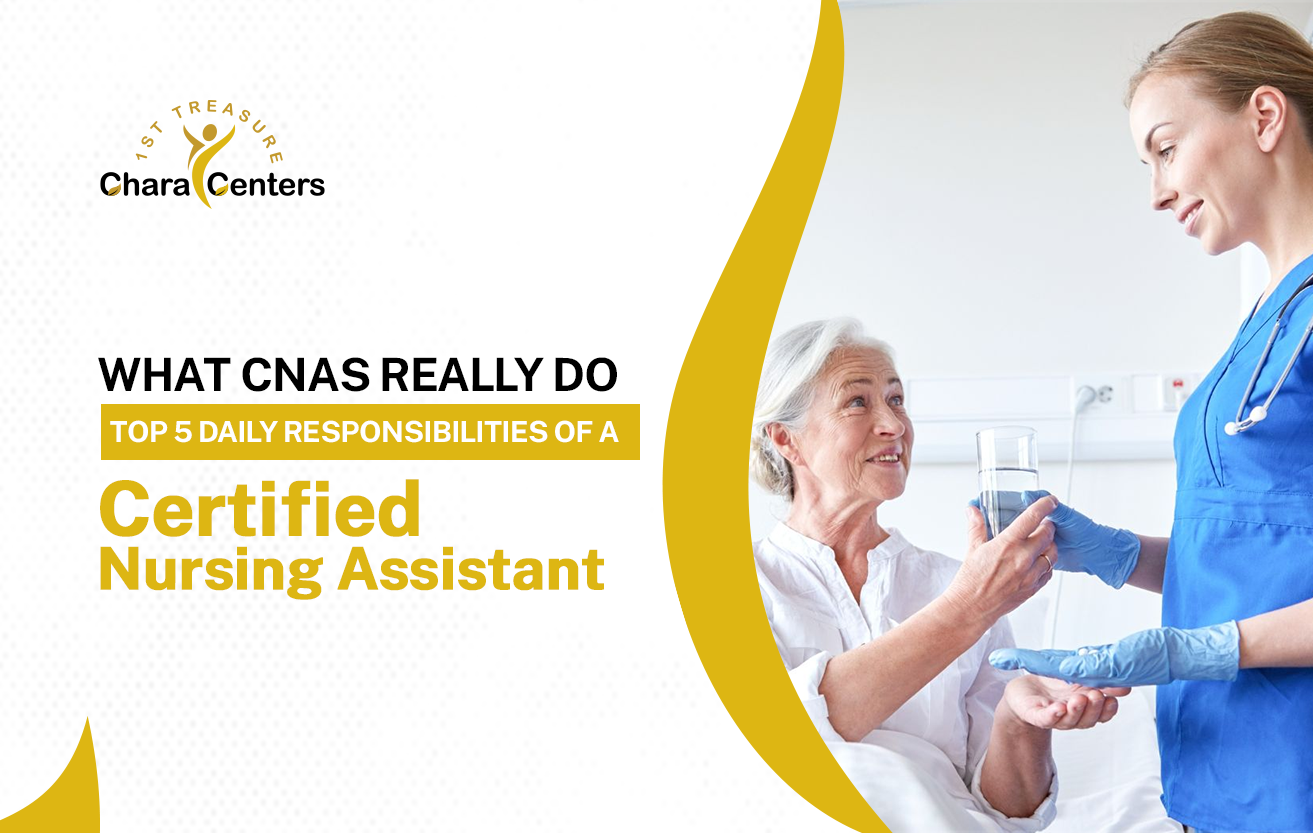
What Do CNAs Do: 5 Daily Duties of a Certified Nursing Assistant
February 13, 2026
You want a rewarding healthcare career, but nursing programs can seem long, expensive, and overwhelming. The problem? You know you want to help people, but you’re not sure what CNAs do, how demanding the work is, or if it’s the right entry point for your future. That uncertainty can keep you stuck in a job with limited growth, leaving you unsure about your next step.
The good news is that becoming a Certified Nursing Assistant (CNA) is one of the fastest ways to start a meaningful healthcare career, gain hands-on experience, and open doors to higher nursing roles. Understanding CNA responsibilities and daily duties can help you decide if this career aligns with your goals.
At 1st Treasure Chara Centers, our Certified Nursing Assistant program equips you with practical skills, confidence, and real-world training so you can start making a difference in patients’ lives immediately.
What Is a Certified Nursing Assistant?
A Certified Nursing Assistant is a trained healthcare professional who supports patients with daily living activities under the supervision of registered nurses (RNs) or licensed practical nurses (LPNs). CNAs provide direct care to patients, helping maintain comfort, safety, and overall well-being.
When people ask what do CNAs do, the answer is that CNAs bridge the gap between nursing staff and patients. They are essential for maintaining routine care, observing changes in patient condition, and assisting with activities that patients may struggle with on their own.
Becoming a CNA is an excellent starting point to enter healthcare quickly, gain hands-on experience, and explore career growth opportunities in nursing or allied health fields.
Why Understanding CNA Responsibilities Matters
Knowing CNA duties before enrolling in a program can help you:
- Determine if this career matches your interests and skills
- Understand the daily demands and expectations
- Prepare for the training and certification process
- Recognize the value CNAs bring to patient care
CNAs are not just assistants; they are critical members of the healthcare team. Every task they perform contributes to patient safety, comfort, and recovery.
Top 5 CNA Duties
Here’s a breakdown of the most important daily CNA responsibilities that define what do CNAs do:
-
Assisting With Daily Living Activities
A large part of CNA work involves helping patients with activities of daily living (ADLs), such as:
- Bathing and grooming
- Dressing
- Eating and feeding assistance
- Toileting and incontinence care
- Mobility support and transfers
These tasks ensure patients maintain dignity, hygiene, and comfort. CNAs often become a consistent, compassionate presence for residents, especially in long-term care or assisted living settings.
-
Monitoring and Recording Patient Health
CNAs play a vital role in patient observation. They are trained to notice subtle changes in health that might require a nurse’s attention. What do CNAs do in this context?
- Measure vital signs (temperature, blood pressure, pulse, respiration)
- Track weight, intake, and output
- Document observations and report concerns to nurses
Accurate monitoring is critical for patient safety and effective medical care.
-
Supporting Nursing Staff
CNAs act as extensions of the nursing team. Their CNA responsibilities include assisting nurses with procedures or tasks, such as:
- Preparing patients for examinations
- Collecting specimens
- Helping with medical equipment
- Ensuring patient rooms are clean and organized
By performing these duties, CNAs help nurses focus on higher-level clinical tasks while ensuring patients receive comprehensive care.
-
Providing Emotional Support and Companionship
Healthcare is not just physical care; it’s emotional care too. CNAs often serve as the main point of interaction for patients. What do CNAs do beyond physical care?
- Offer encouragement and comfort
- Listen to patient concerns
- Foster a positive and supportive environment
This interpersonal aspect is one of the most rewarding parts of the job and highlights the unique impact CNAs have on patients’ quality of life.
-
Maintaining a Safe and Clean Environment
Safety and hygiene are critical in healthcare settings. Part of the CNA duties includes:
- Cleaning and disinfecting patient areas
- Ensuring equipment is properly sanitized
- Following infection control protocols
- Assisting in emergency situations if needed
A clean, safe environment reduces risk for patients and staff alike and supports better outcomes.
Skills Every CNA Needs
To excel as a CNA, you’ll need a combination of technical and interpersonal skills. These include:
- Communication: Effectively sharing observations with nurses and families
- Compassion and patience: Working with patients of varying abilities and moods
- Physical stamina: Assisting patients with transfers, walking, and personal care
- Time management: Prioritizing multiple tasks efficiently
- Teamwork: Collaborating with RNs, LPNs, and other CNAs
At 1st Treasure Chara Centers, our CNA program emphasizes both skill development and hands-on practice, preparing students for real-world success.
Where CNAs Work
CNA roles are in high demand across multiple settings, including:
- Nursing homes
- Assisted living facilities
- Rehabilitation centers
- Hospitals and clinics
- Home healthcare agencies
By completing a Certified Nursing Assistant program, you gain flexibility in choosing a work environment that matches your interests and lifestyle.
Benefits of Becoming a CNA
Choosing a CNA career provides multiple advantages:
- Fast Entry into Healthcare: Programs can often be completed in weeks, allowing you to start earning quickly.
- Job Stability: The growing demand for CNAs ensures strong employment prospects.
- Career Advancement: CNAs gain experience and knowledge that can lead to LPN or RN programs.
- Meaningful Work: Daily interactions allow you to make a real difference in patients’ lives.
- Competitive Pay: Many CNAs receive higher wages than entry-level healthcare aides.
CNA Training at 1st Treasure Chara Centers
At 1st Treasure Chara Centers, our Certified Nursing Assistant program is designed to equip you with all the skills and confidence needed for the role. Our program includes:
- Classroom instruction for theory and procedures
- Hands-on clinical practice
- Supervised experience with patients
- Preparation for certification exams
- Guidance on career placement
This structured approach ensures you’re ready to step into a professional setting immediately after completing the program.
Why Enroll in Our CNA Program
Choosing the right training center is critical. Here’s why 1st Treasure Chara Centers is ideal:
- Experienced and licensed instructors with real-world healthcare expertise
- Small class sizes for personalized learning
- Focus on both CNA duties and professional growth
- Supportive, hands-on environment
- Flexible scheduling options for working students
If you want a career that is both stable and fulfilling, our CNA program is the fastest, most reliable way to start.
Start Your CNA Journey Today
Understanding what do CNAs do and mastering CNA responsibilities is just the first step. Now, it’s time to act.
- Apply for the Certified Nursing Assistant Program at 1st Treasure Chara Centers
- Schedule a tour or consultation to learn about hands-on training
- Join our next class and start building a meaningful healthcare career
Your future in nursing starts here. Don’t wait, enroll today and begin making a difference in patients’ lives.
Latest Posts
August 13, 2024
Is the Role of a CNA the Same as That of a Nurse?
August 13, 2024
Phlebotomists: Vital Contributors to the Healthcare System

August 13, 2024