

How to Build a Healthcare Career with Phlebotomy Programs Near Canton
July 17, 2026
You want to work in healthcare, but four years of college isn’t the plan right now. That’s the reality for a lot of people in Canton looking at their options, and phlebotomy keeps coming up as the answer: a real, in-demand job you can be trained for in a matter of weeks.
Phlebotomy programs near Canton put students in front of real patients fast. You learn to draw blood safely, handle specimens correctly, and become a genuine asset to the medical teams in hospitals, clinics, labs, and donation centers around you. A few months of focused training, and you walk out with clinical skills, a certification you can test for, and a foot solidly in the healthcare door.
What makes this career path even more appealing is that it doesn’t stop at an entry-level position. The skills and certifications you earn can help you move into specialized laboratory roles or other healthcare careers over time.
What You Learn in a Phlebotomy Training Program
Good phlebotomy programs near Canton don’t just teach you where to stick the needle. They build the confidence and judgment you need before you’re standing in front of a real patient in a real clinical setting.
Technical Skills
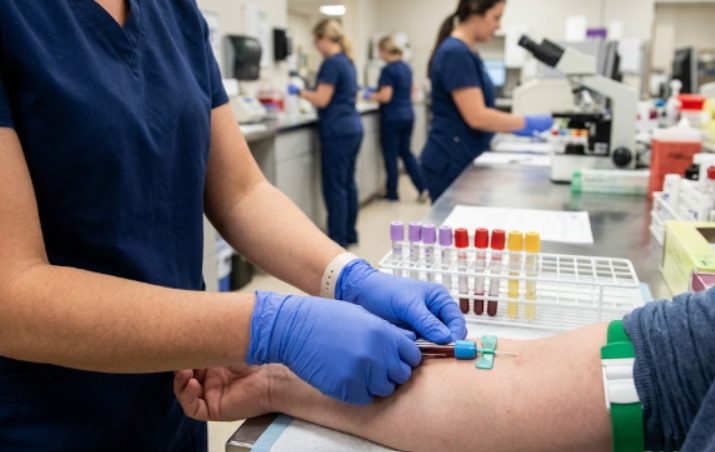
The hands-on training is the whole point of enrolling. You’ll practice, repeat, and refine the exact skills you’ll use on shift every day:
- Venipuncture techniques
- Capillary blood collection
- Proper order of draw
- Specimen labeling and handling
- Blood collection equipment
- Quality control procedures
Healthcare Knowledge
Technique alone won’t get you hired. Programs also build the foundation underneath it:
- Basic anatomy and physiology
- Medical terminology
- Infection prevention
- OSHA safety standards
- HIPAA patient privacy requirements
- Specimen transportation procedures
Patient Care Skills
Here’s what separates a good phlebotomist from a great one: the ability to put a nervous patient at ease before the needle ever comes out. Strong phlebotomy programs near Canton spend real time on this side of the job too:
- Professional communication
- Patient comfort techniques
- Compassionate care
- Problem-solving
- Teamwork
- Workplace professionalism
Put technique, clinical knowledge, and bedside manner together, and you get a graduate who can walk into a hospital floor on day one without missing a beat.
Industry Insight: The students who succeed aren’t the ones who master venipuncture the fastest. They’re the ones who stay calm under pressure, talk patients through the process, and never cut corners on specimen handling. Employers notice those habits immediately, and they’re what earn trust from day one.
How to Become a Certified Phlebotomist in Georgia
The path to becoming a phlebotomist in Georgia is simpler than most people expect. It all starts with choosing the right training program.
Step 1: Complete a Phlebotomy Training Program
Enroll somewhere that pairs classroom instruction with real hands-on lab time. You’ll cover blood collection technique, specimen handling, safety protocols, and patient care, not just theory.
Step 2: Gain Practical Experience
Clinical practice is where the training actually sinks in. Every successful draw under instructor supervision builds the muscle memory and confidence employers are looking for.
Step 3: Earn National Certification
Georgia doesn’t require a state license for phlebotomists, but don’t let that fool you; most employers won’t look twice at a resume without a recognized certification. The National Healthcareer Association’s Certified Phlebotomy Technician (CPT) credential is the one most commonly asked for, though other nationally accepted certifications exist depending on where you want your career to go.
Certification is proof, to yourself and to employers, that you know what you’re doing and take patient care seriously. In a competitive job market, proof matters.
Career Opportunities After Phlebotomy Training
Blood collection touches nearly every corner of healthcare, so once you’re trained, the doors open in more directions than you might expect.
Hospitals
Hospitals hire more phlebotomists than any other employer. You’ll draw blood from patients of all ages, working shoulder to shoulder with nurses, physicians, and lab staff. No two shifts look the same, ideal if you thrive on pace and variety.
Read more: How Phlebotomy Classes in GA Prepare You for Major Hospitals
Diagnostic Laboratories
Every lab result starts with a clean, accurate blood draw. In a diagnostic lab, you’ll collect, label, and prepare specimens before they’re sent for testing. You’ll also learn how laboratory operations work behind the scenes and why quality control is essential for accurate results.
Physician Offices and Clinics
Family practices, specialty clinics, and outpatient centers all need reliable phlebotomists for routine draws. The pace is steadier here, and you’ll often see the same patients again and again, a nice change if hospital chaos isn’t your thing.
Blood Donation Centers
Someone has to safely collect blood from every volunteer donor who walks through the door. It’s technical work with a direct, tangible impact: the blood you draw becomes the blood that saves someone’s life.
Where Can Your Career Grow?
For many healthcare professionals, phlebotomy programs near Canton aren’t the destination; they’re the launch pad. The patient-facing experience you build here carries directly into:
- Medical Assistant: Blend clinical care with front-office responsibilities in a physician’s practice
- EKG Technician: Assist with cardiac monitoring and diagnostic testing
- Patient Care Technician (PCT): Take on broader patient support, from mobility assistance to basic care
- Medical Laboratory Technician (MLT): Move into full lab testing and specimen analysis
- Registered Nurse (RN): Plenty of nursing students start as phlebotomists first, using it to build clinical confidence before nursing school even starts
The skills you build here don’t expire. They follow you through every stage of a healthcare career, which is exactly why Phlebotomy Programs near Canton make such a strong first step.
Build More Than One Healthcare Skill
At 1st Treasure Chara Centers, your healthcare journey doesn’t end with phlebotomy. Beyond the Phlebotomy Technician Program, the center also offers Certified Nursing Assistant (CNA), Medication Aide, CPR/BLS, and other healthcare training programs, allowing you to stack certifications and continue advancing your career with one trusted healthcare training provider in Georgia.
How Much Do Phlebotomy Programs Near Canton Cost?
Affordability is a big reason phlebotomy draws so many first-time healthcare students. Compared to careers that demand years of college tuition, this is a genuinely low-cost way into medicine.
Tuition and total expenses for phlebotomy programs near Canton typically fall between $650 and $3,500. Where you land in that range depends on whether you go with a fast-track private academy or a full community college program that awards college credit.
| Program Type | Estimated Local Cost | Average Length | Typical Inclusions |
|---|---|---|---|
| Short-Term / Hybrid Training | $650 – $1,300 | 4 to 8 weeks | Online or evening lectures, in-person clinical lab practice |
| Vocational & Technical Schools | $1,500 – $2,300 | 7 to 12 weeks | In-person lectures, guided clinical labs, national exam prep |
| Community & State Colleges | $2,400 – $3,500 | 1 full semester | Academic college credits, extensive hospital clinical rotations, and lab fees |
Hidden Costs to Keep in Mind: Some programs bundle everything into one flat rate. Others make you pay separately for the national certification exam (typically $115 to $200), background checks, drug screenings, and clinical uniforms or scrubs. Get an all-inclusive cost sheet before you enroll anywhere; it saves you from surprises later.
Although costs differ between schools, investing in phlebotomy programs near Canton can provide long-term value by helping students qualify for healthcare positions in a relatively short period. Before enrolling, compare programs based on curriculum quality, hands-on training opportunities, certification preparation, and career support rather than tuition alone.
Phlebotomy Technician Salary Breakdown in Georgia
Demand for phlebotomists stays steady across hospitals, labs, physician offices, and donation centers, and pay climbs quickly once you’re certified and experienced.
| Position / Tier | Hourly Wage | Estimated Annual Salary | Primary Workplace Settings |
|---|---|---|---|
| Entry-Level Phlebotomist | $15.25 – $18.50 | $31,500 – $38,500 | Community blood banks, mobile donor centers, open clinical roles. |
| Certified Technician | $19.00 – $22.50 | $39,500 – $46,800 | Hospital networks, emergency departments, specialty medical practices. |
| Lead Phlebotomist | $23.00 – $26.00+ | $48,000 – $54,000+ | Corporate lab networks, regional management, travel contracts. |
Local Market Insight: If you are looking for work locally around Canton and Cherokee County, the market is in a great spot. Phlebotomists in our area average about $22 an hour, which is actually slightly higher than the national average. Because local hospital systems and outpatient diagnostic networks are expanding so quickly, employers are actively competing for reliable, certified staff.
Job Outlook: According to the U.S. Bureau of Labor Statistics (BLS), the field is expected to grow by 6% over the next decade, which is faster than most other jobs in the economy. This means there will be roughly 18,400 open positions to fill every single year across the country.
A big reason entry-level jobs stay so safe from budget cuts is simple “labor churn.” A lot of phlebotomists eventually go back to school to become nurses or lab techs, or they retire from the field. This constant movement creates a steady stream of open spots for new graduates looking to get their foot in the door.
When comparing different training options, most students naturally ask: Is Phlebotomy Certification Worth the Cost? Yes. Local programs generally run $800–$1,800 and take under four months to complete. Most students recover their tuition within the first two to three months on the job, a faster payback than most healthcare degree paths.
Your Safety Net: Major Georgia healthcare employers require verified, in-person clinical stick benchmarks. At 1st Treasure Chara Centers, you’ll complete every required unassisted draw under direct medical supervision, so you step onto the clinic floor with real, earned confidence from day one.
Start Your Phlebotomy Training Today
If you’re ready to begin a rewarding healthcare career, enrolling in one of the phlebotomy programs near Canton can help you take the first step. With hands-on training, certification preparation, and valuable patient care experience, you’ll develop the skills employers look for in today’s healthcare workforce.
Whether your goal is to start working as a phlebotomist or build a foundation for future careers in nursing or allied health, the right training program can open new opportunities.
If you’re ready to take the next step, explore the Phlebotomy Technician Program at 1st Treasure Chara Centers to see how practical training and experienced instruction can help you build confidence from your very first day.
FAQ about a Phlebotomy Program Near Canton
Q1: How long does it take to complete a phlebotomy program near Canton?
Most programs wrap up in 4 to 12 weeks, depending on the school’s schedule and whether you go full-time, part-time, or hybrid. Clinical training and certification exam prep are usually built right in before graduation.
Q2: Do I absolutely need a national certification to work in Georgia?
Georgia doesn’t mandate state licensing for phlebotomists, technically. But if you want competitive entry-level phlebotomy jobs, a credential is non-negotiable. Major healthcare networks serving Canton and Woodstock rarely even interview uncertified applicants; the liability risk isn’t worth it to them.
Q3: Can I work while completing my phlebotomy training?
Yes, and plenty of students do. Quality phlebotomy programs near Canton build in real flexibility, from hybrid tracks at an allied school of healthcare to night classes at the Georgia School of Phlebotomy. Keep your day job, train around it, and start browsing part-time phlebotomy jobs near me once you’re close to finishing.
Q4: How many blood draws are required to graduate?
It varies by school, but most approved programs require 30 to 50 successful venipunctures on live subjects before you’re cleared for graduation and national testing.
Latest Posts
August 13, 2024
Is the Role of a CNA the Same as That of a Nurse?
August 13, 2024
Phlebotomists: Vital Contributors to the Healthcare System

August 13, 2024