
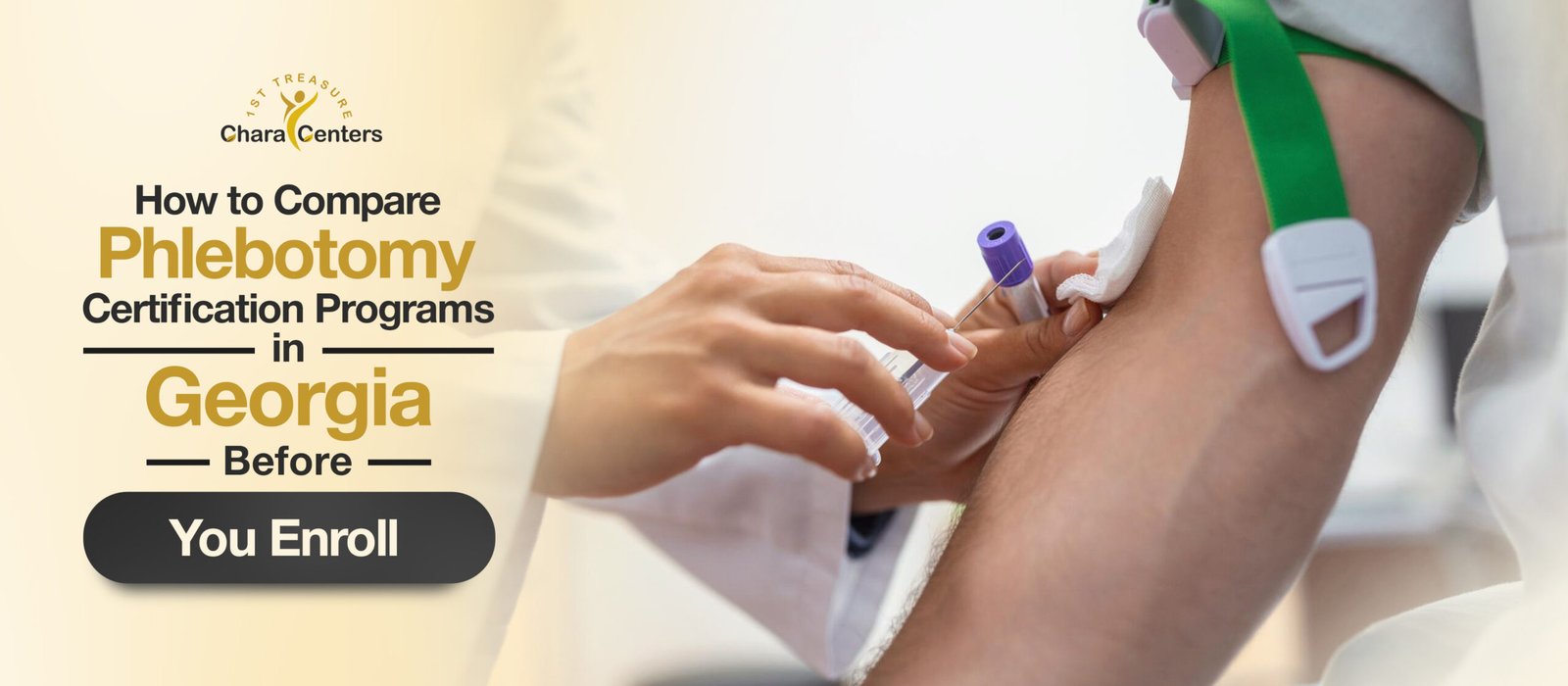
How to Compare Phlebotomy Certification Programs in Georgia Before You Enroll
June 29, 2026
Most phlebotomy schools in Georgia fail to prepare students for real job interviews. Because the state does not require a special license to do this job, many unapproved schools open up just to take your money. They make you practice only on fake plastic arms, which means you cannot get a good job when you finish.
Large hospitals like Emory, Grady, and Piedmont will not hire people who go to these bad schools. If you pick a school just because it is cheap or close to your house, you will run into big problems.
You will not get to practice on real people, the school will not help you prepare for the big national test, and they will surprise you with a lot of hidden costs. You want a better career and a good paycheck, so you must know how to pick a school that actually helps you get hired through high-quality phlebotomy certification programs in Georgia.
Why Choosing the Right Phlebotomy Certification Program in Georgia Matters
Georgia does not require a state phlebotomy license. This is actually excellent news. It means you can get certified faster and start working sooner than in many other states. However, because there is no state oversight, the quality of training programs varies wildly.
Many private healthcare schools in Georgia are approved by the Georgia Nonpublic Postsecondary Education Commission (GNPEC). GNPEC helps ensure these schools meet the state’s basic operating and consumer protection standards, but it’s still up to you to compare programs for the quality of their training, clinical experience, and certification preparation.

Employers across Georgia, including hospitals, clinics, blood banks, and diagnostic labs, know this. They do not just look at your certificate. They look at where you trained, how many blood draws you practiced, and which national certification you hold. Your choice of school can either open doors immediately or leave you applying to the same jobs for months with no response.
Did you know? The U.S. Bureau of Labor Statistics Occupational Outlook Handbook projects that employment for phlebotomists will grow 6% through 2034, which is faster than the average growth rate for all occupations. In Georgia’s expanding medical network, that steady demand translates to roughly 18,400 open job slots across the nation each year.
What Makes the Best Phlebotomy Programs in Georgia Stand Out?
Before you compare schools, you need to know what a genuinely good program looks like. Here is what separates a career-changing program from one that just looks good on a website:
- Nationally Recognized Certification Preparation: Specifically for the NHA (National Healthcareer Association) CPT exam or ASCP certification. These are the credentials Georgia employers actually recognize. If a school cannot tell you exactly which exam they prepare you for, walk away.
- Real Hands-On Training: This is non-negotiable. You need to practice venipuncture training on actual patients, not just mannequin arms.
- Clinical Experience Placement: The best phlebotomy programs in Georgia connect you with a real healthcare facility for your clinical hours. This is your foot in the door with future employers.
- Modern Lab Equipment: If a school’s equipment looks like it belongs in a museum, your training won’t reflect what you’ll find in a real Georgia clinic or hospital.
- Flexible & Hybrid Scheduling: Most students are working adults, parents, or career changers who can’t just pause their lives. The best phlebotomy programs in Georgia offer evening, weekend, or hybrid setups that let you complete your lecture modules online before coming into the lab for hands-on practice.
- Career Support: Look for resume help, interview coaching, and connections to local employers. A school that cares about your employment will show you proof of student outcomes.
5 Factors to Compare Phlebotomy Certification Programs in Georgia Before You Enroll
The key factors include:
1. Accreditation and Certification Exam Preparation
Accreditation means the program has been evaluated by an external body and meets established educational standards. When you attend an accredited CNA or phlebotomy training program, your certification exam application goes more smoothly, employers take your credential more seriously, and you may qualify for financial aid.
Ask every school directly: “Which certification exams does your program prepare students for?” If they hesitate or give vague answers, keep shopping.
The NHA CPT (Certified Phlebotomy Technician) credential is one of the most commonly accepted by Georgia employers. Some programs also prepare you for ASCP or AMT credentials. Know what you’re getting before you pay.
2. Clinical Training and Real-World Experience
This is the biggest differentiator between programs, and the one most students overlook when comparing prices.
Blood collection training on a practice arm is fine for learning the basics, but it doesn’t build the confidence and skill you need for a real patient. Quality programs in Georgia include externships at partner healthcare facilities where you complete a required number of supervised venipunctures on actual patients.
Ask any program you’re considering: “How many successful venipunctures will I complete before graduation?” A solid answer is typically 100 or more. Anything vague like “it depends” is a red flag.
3. Tuition, Fees, and the Real Cost of Getting Certified
Here’s where many Georgia students get caught off guard. The tuition number on a school’s website is rarely the full picture. Before you commit, ask about:
- Registration fees
- Lab fees and supply kits
- Textbooks and uniforms
- Certification exam fees (typically $117–$135 for the NHA exam)
- Background check and drug screening costs
A program that advertises low tuition but charges separately for everything else can end up costing more than a slightly pricier school that includes everything. Our blog post comparing Phlebotomy Certification Cost in 2026 shows you exactly how to calculate the real total cost so there are no surprises.
And if you’re worried about whether it’s all worth it financially, we’ve also covered that question in depth: Is Phlebotomy Certification Worth the Cost?
4. Career Services and Job Placement Support
Getting certified is step one. Getting hired is step two, and a lot of programs stop caring after step one.
The best phlebotomy programs in Georgia actively help you cross the finish line. Look for programs that offer resume review, mock interviews, and employer connections. Ask what percentage of their graduates find employment within 90 days of certification. A school that’s proud of its outcomes will tell you that number without hesitation.
5. Student Reviews and Graduate Outcomes
Read reviews, but read them critically. Look for comments that mention specific things: “I got hired within two weeks” or “the clinical hours were thorough” tells you much more than a vague five-star rating.
Check Google reviews, Facebook, and healthcare training forums. And if you’re comparing specific schools, look for patterns. Multiple reviews mentioning the same issue (like poor clinical access or hidden fees) are worth taking seriously.
Side-by-Side Comparison: Phlebotomy Certification Programs in Georgia
| Factor | What a Strong Program Offers | What a Weak Program Looks Like |
|---|---|---|
| Accreditation | Students receive official institutional recognition and direct preparation for the NHA or ASCP exams. | The school stays vague about its credentials and won’t give straight answers. |
| Clinical Hours | Trainees complete 100 or more supervised blood draws on real patients. | Students barely get any practice or only draw from plastic training models. |
| Tuition Transparency | Every single fee is visible upfront in a comprehensive, all-inclusive cost breakdown. | They draw people in with a low price but hide major lab and book costs. |
| Schedule Options | Applicants can choose from flexible night, weekend, or fast-track day classes. | They offer just one rigid time slot, forcing students to completely rearrange their lives. |
| Externship Placement | The institution secures direct placement at a real hospital or diagnostic lab. | Students have to cold-call local clinics to find their own clinical spot. |
The Real Cost of Choosing the Wrong Program
Let’s say you choose a phlebotomy school because it is $200 cheaper. But then you find out the clinical training was minimal, your certification exam preparation was weak, and you fail your certification exam on the first attempt.
You must pay the re-examination fee and delay your job search by three months. You might need to pay for additional practice hours elsewhere. Suddenly, that $200 “savings” cost you real money, real time, and real stress.
Fortunately, there are ways to reduce training costs without sacrificing quality. Payment plans, financial aid, employer reimbursement programs, and workforce development grants are available right here in Georgia. Don’t let cost be the only factor driving your decision, but don’t overpay when smart options exist.
Questions to Ask Any Phlebotomy Certification Programs in Georgia Before Enrolling
Use this list on every admissions call:
- Is your program accredited, and by whom?
- Which national certification exams does this program prepare me for?
- How many venipunctures will I complete on real patients?
- Are externships included, or do I arrange them myself?
- What percentage of your graduates pass their certification exam on the first attempt?
- What percentage find employment within 90 days of graduating?
- What does the total cost include? What is not included?
- What career support do you provide after graduation?
- Can I speak with or see testimonials from recent graduates?
A school with nothing to hide will answer every one of these questions with confidence.
Ready to Enroll in the Best Phlebotomy Programs in Georgia?
Finding the best phlebotomy programs in Georgia is the absolute foundation of your new healthcare career. Take the time to interview admissions representatives, review the total breakdown of costs, and ensure you will get the real-world clinical experience required to stand out to Georgia’s top employers.
You don’t have to navigate these red flags alone. At 1st Treasure Chara Centers, we designed our Phlebotomy Technician program to meet every single high-quality standard listed above, with no hidden fees, guaranteed hands-on draws, and direct NHA test prep.
Frequently Asked Questions About Phlebotomy Certification Programs in Georgia
How long does phlebotomy certification last?
Most national certifications, like the NHA CPT, stay active for exactly two years. To prevent your credentials from expiring, you just need to keep up with a few continuing education credits and pay your standard renewal fee before your time is up.
How to become a phlebotomist in Georgia?
Since the state of Georgia does not hand out a specific government license, your real goal is simply to check off the boxes that local hospital managers care about. Here is the realistic roadmap to getting a paycheck:
- Lock in a spot at reputable phlebotomy schools in Georgia that focus heavily on practical training.
- Put in your hours on the floor during your clinical externship.
- Ace your national exam, specifically aiming for credentials like the NHA CPT or ASCP.
- Polish up your resume and start sending out applications for local phlebotomy jobs.
How long does it take to get certified in phlebotomy in GA?
Most phlebotomy certification programs in Georgia run between 4 and 12 weeks for the classroom and lab portion, followed by an externship for phlebotomy training clinical hours. From start to certification, many Georgia students complete the full process in 2 to 4 months, sometimes faster in accelerated programs.
Latest Posts
August 13, 2024
Is the Role of a CNA the Same as That of a Nurse?
August 13, 2024
Phlebotomists: Vital Contributors to the Healthcare System

August 13, 2024