
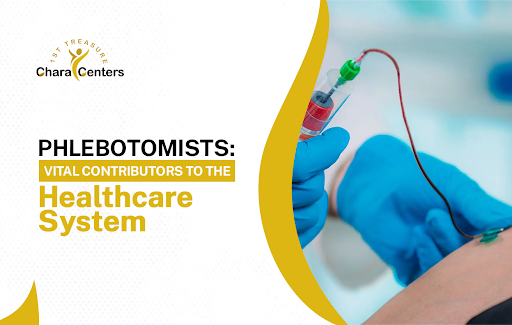
Phlebotomists: Vital Contributors to the Healthcare System
August 13, 2024
Phlebotomists play a critical, life-saving role in healthcare. They collect and process blood samples from patients, which are essential for donations, testing, research, and life-saving procedures such as transfusions. This role is not only valuable on its own but also serves as an ideal starting point for those interested in advancing their careers in medical care. Becoming a phlebotomist takes less than a year, making it one of the most accessible allied health professions, especially since it doesn’t require a bachelor’s degree.
How Long Does it Take to Become A Phlebotomist?
To begin your career as a phlebotomist, you generally need a high school diploma and the completion of a training program. Choosing a program led by reputable experts, like those at 1st Treasure Chara Centers, is crucial. Our program provides you with valuable hands-on experience, allowing you to work with patients and as part of a medical team. As you gain a deeper understanding of the healthcare environment, you may discover related careers that align with your interests. Continue reading to learn more about the path to becoming a phlebotomist, including how long it may take to become a phlebotomist and whether this role is the right fit for you.
What Does a Phlebotomist Do?
Phlebotomists are specialized healthcare professionals who draw blood samples for donations, testing, research, and life-saving procedures such as transfusions. Blood tests are a cornerstone of modern healthcare, aiding doctors in diagnosing and monitoring conditions like allergies, diabetes, autoimmune diseases, and cancer.
Phlebotomists receive detailed instructions regarding the type and quantity of samples to collect, which may include other biological specimens. Before the procedure, they help prepare and calm patients, ensuring the process goes smoothly. Afterward, they monitor patients for any adverse effects, such as nausea, bruising, or dizziness. If you’re wondering, Is being a phlebotomist hard? You’ll be pleased to know that it’s one of the more straightforward healthcare fields to enter. However, certain skills are essential for success in this role—let’s explore those next.
Skills and Training: How Long Does It Take to Become a Phlebotomist?
Phlebotomists perform various blood collection procedures, with the most common being venipuncture (drawing blood from a vein). Other procedures may involve a simple finger prick. Phlebotomists must be efficient and gentle, particularly when dealing with difficult-to-find veins or patients who are apprehensive about the process. Being organized and methodical is crucial to ensure that the correct amount of blood is collected and that samples are labeled, stored, and recorded accurately. Maintaining a sanitized workspace is essential to prevent contamination, and phlebotomists also update patients’ medical records.
Regarding training, the question “How long does it take to get a phlebotomy certification?” is often asked. The good news is that you can become a certified phlebotomist in a few months.
Phlebotomist Work Environment
If you’re concerned about whether phlebotomy is hard, rest assured that it is a manageable and rewarding career. Many phlebotomists work full-time, with schedules that vary based on their employer. Some may work weekends or night shifts. Typically, phlebotomists are employed in medical and diagnostic laboratories, hospitals, physician offices, outpatient centers, and ambulatory healthcare services. In some cases, they may even visit patients’ homes or travel between healthcare facilities.
Steps to Becoming a Phlebotomist
- Earn a High School Diploma: You can start your phlebotomy career with a high school diploma or its equivalent. Taking relevant courses in science, anatomy, physiology, mathematics, and health can be beneficial. While some phlebotomists begin working with on-site training, many employers prefer or require candidates to earn a phlebotomy certificate.
- Complete a Phlebotomy Training Program: Phlebotomy training typically takes one to three months, depending on your schedule and the program’s scope. At 1st Treasure Chara Centers, our 120-hour training program provides classroom instruction and hands-on education, covering medical terminology, safety protocols, and blood collection techniques. Many states require phlebotomists to complete their training through an accredited program.
- Consider Professional Certification: Obtaining professional certification enhances your skills and demonstrates your commitment to excellence. Certifications are available through various organizations, and while not required in every state, they can benefit your career. Certification requirements usually include earning a GED or high school diploma, completing an accredited training program, gaining clinical experience, and passing an exam. Certified phlebotomists maintain their credentials by completing continuing education and paying renewal fees.
- Understand State Requirements: Only four states—Louisiana, Washington, California, and Nevada—mandate phlebotomist certification. However, other states may require the completion of an accredited program before practicing.
In Summary:
Now that you know the answer to how long a phlebotomy course will take, why not move forward with the next step and enroll in a program? The path to becoming a phlebotomist is straightforward and typically takes just a few short months. Plus, the hands-on experience you gain will prepare you for a fulfilling healthcare career.
If you’re interested in learning more about our phlebotomy program, contact the professionals at 1st Treasure Chara Centers today. Let us help you take the first step toward a rewarding career in healthcare.
Latest Posts
August 13, 2024
Is the Role of a CNA the Same as That of a Nurse?
August 13, 2024
Phlebotomists: Vital Contributors to the Healthcare System

August 13, 2024

Leave a Reply