
Certified Medication Aide Training in GA for Working CNAs
September 15, 2026
A healthcare career can keep moving long after the CNA badge is earned. After gaining experience on the job, many nursing assistants start looking for ways to take on more responsibility without walking away from the work they already know.
Becoming a certified medication aide can be one option. The pathway builds on the patient-care experience a CNA already uses every day and adds focused training in medication administration, dosage calculations, documentation, patient monitoring, and medication safety. Instead of starting from zero, working CNAs can add a specialized credential to an existing healthcare career.
Georgia has a defined medication aide pathway for eligible CNAs. It includes approved training, clinical skills competency, a standardized written examination, and registry requirements. For a CNA ready to expand their skills, the next step may be closer than it seems.
Certified Medication Aide Career Outlook
A few numbers from Georgia’s medication aide rules help put the certification process into perspective.
- 80% is the minimum score required to pass Georgia’s standardized written competency examination.
- 3 attempts are available to pass the written exam before the candidate must repeat the medication aide training.
- 90 days is the testing window for those three attempts.
- 30 business days is the period provided in Georgia law for the successful examination and skills checklist information to be entered into the Medication Aide Registry.
- Every 2 years is the renewal cycle for a Georgia medication aide certificate.
The numbers also show why completing a class is only one part of becoming a CMA. Georgia requires successful completion of training, skills competency, examination, and registry requirements before a CMA can perform medication aide duties under the applicable rules.
Benefits of Transitioning into a CMA Role
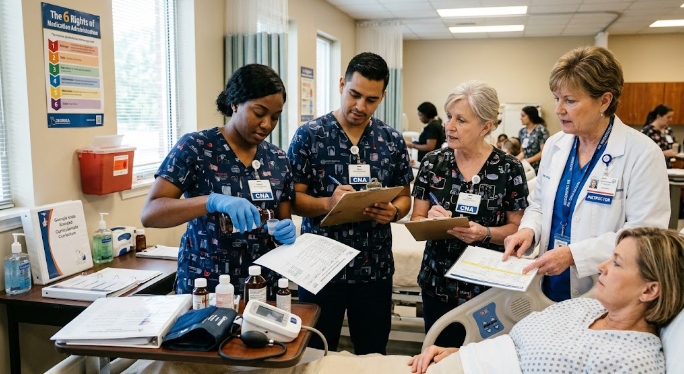
The transition from CNA to CMA can be a practical career step for working nursing assistants who want to develop medication-related skills.
Build on Your CNA Experience
Your CNA experience gives you a strong foundation in patient care, safety, communication, and documentation. CMA training adds medication-related skills to that foundation.
Learn Specialized Medication Skills
Training covers areas such as medication safety, dosage calculations, administration, documentation, and patient monitoring.
Take on More Responsibilities
The transition from CNA to CMA can prepare eligible CNAs for additional medication-related duties within their permitted scope of practice.
Grow Without Starting Over
Working CNAs can continue their healthcare careers while gaining a new area of competency. A focused CMA program can make this professional development more manageable.
Add Another Career Qualification
A CMA credential gives experienced CNAs another qualification to consider when exploring eligible medication-related roles. For CNAs ready to expand their skills, CMA training can be a focused next step without leaving patient care behind.
Certified Medication Aide Requirements in Georgia
Understanding the CMA requirements before enrolling can prevent unnecessary delays, particularly if you are a working CNA trying to determine whether you meet Georgia’s eligibility criteria.
1. Active CNA Status
The first step is maintaining active CNA status and good standing on the Georgia Certified Nurse Aide Registry. This is not a credential that can simply be added without meeting the underlying CNA eligibility requirements. CNAs whose certification has expired should first check their current registry status and determine whether they need to complete a renewal or refresher process before pursuing medication aide training.
2. Approved Medication Aide Training
Georgia requires completion of the appropriate medication aide training program. The standardized medication aide curriculum must be administered by a Georgia-licensed registered nurse or pharmacist.
3. Required Skills Competency
Training also includes a practical skills component. Candidates must complete the required skills checklist and demonstrate the clinical skills necessary for medication aide responsibilities. Georgia rules require the standardized medication administration checklist to be used for competency.
4. Written Competency Examination
The written competency examination is another major step. Georgia requires a minimum passing score of 80 percent. Candidates have up to three attempts within 90 days before having to repeat the entire medication aide training program. That makes exam preparation part of the training process, not something to leave until the final day.
5. Medication Aide Registry
Completing a class does not mean the entire process is automatically finished. The applicable registry requirements must also be completed before working as a CMA under Georgia’s requirements. Georgia CareConnect provides access to the Nurse Aide and Medication Aide Registries and related training and certification services.
Meeting the eligibility requirements is only the starting point. The full process of becoming a medication aide in Georgia also includes training, skills competency, the written examination, and applicable registry requirements.
If you’re an eligible Georgia CNA looking to add medication-related skills to your career, explore CMA classes in Atlanta, GA, and see how a focused training program can fit into your professional goals.
What CNA Experience Brings to CMA Training
The strongest part of the CNA-to-CMA pathway is the foundation you already have. A working CNA is familiar with many of the habits that support safe medication-related care.
These can include:
- Communicating with patients and residents
- Observing changes in condition
- Recording information accurately
- Following infection-control procedures
- Protecting patient safety
- Monitoring vital signs
- Following healthcare procedures
- Reporting concerns to nurses or other appropriate professionals
- Working as part of a healthcare team
CMA education adds another specialized layer to that foundation. The difference is important. Medication administration requires accuracy, careful observation, proper documentation, and an understanding of the limits of the medication aide role. Georgia rules specify the medication-related tasks CMAs may perform and the settings in which those responsibilities apply.
If you want a deeper breakdown of how the two roles differ, you can also read our guide explaining the difference between a CNA and CMA before deciding whether medication aide training fits your career plans.
What Is Covered in Certified Medication Aide Training
Strong medication aide training should prepare students for both knowledge-based testing and real medication-related responsibilities. The CMA classes in Atlanta, GA, at 1st Treasure Chara Centers cover pharmacology basics, medication knowledge, dosage calculations, medication administration, documentation, patient monitoring, legal and ethical considerations, patient rights, and communication with the healthcare team.
Pharmacology Basics

Students learn fundamental medication concepts, including medication uses, side effects, contraindications, and terminology.
Medication Knowledge
Understanding what a medication does is different from simply memorizing a name. Medication aide students need a working understanding of medications and the safety considerations connected with their administration.
Dosage Calculations
Accuracy becomes especially important when working with dosage calculations. A small mathematical error can become a patient safety issue. That is why dosage calculation deserves serious attention during CMA classes.
Medication Administration
Training covers the procedures and safety practices associated with medication administration. The objective is controlled, accurate, and appropriate practice within the permitted role.
Documentation
Medication administration must be documented accurately. Students learn why complete records matter and how documentation supports continuity of care.
Patient Monitoring
Medication administration does not end when the medication has been given. Patient observation remains important. Changes, possible reactions, and concerns need to be recognized and reported through the appropriate channels.
Legal and Ethical Responsibilities
Medication aides also need to understand patient rights, confidentiality, professional boundaries, regulatory expectations, and the importance of staying within the permitted scope of practice.
Communication
Healthcare is rarely a one-person operation. Clear communication between medication aides, CNAs, nurses, residents, patients, and other healthcare professionals can support safer care.
How Long Does CMA Training Take in Georgia
Training hours can vary by provider, so prospective students should compare the complete program rather than choosing based only on the shortest number advertised.
At 1st Treasure Chara Centers, the current certified medication aide training program lists 20 total hours, including
- 8 theory hours
- 12 clinical hours
- Monday through Friday classes
The program also lists a textbook, uniform, program resource kit, and certification examination among its included components. A $50 registration fee is listed separately from tuition. For working CNAs, a concentrated schedule can make professional development easier to plan around existing responsibilities.
How to Choose CMA Classes in Atlanta, GA
A search for CMA classes in Atlanta, GA can return plenty of options. The challenge is separating a convenient program from a suitable one. Several questions deserve attention before enrollment.
Does the Program Follow Georgia Requirements?
A general medication course is not automatically the same as a Georgia medication aide training program.
Check whether the program uses the required curriculum, meets applicable eligibility standards, includes the skills competency process, and prepares candidates for the standardized examination.
Does the Program Include Clinical Training?
Medication-related skills cannot be learned effectively through a textbook alone. Clinical instruction gives working CNAs an opportunity to connect medication theory with practical procedures and competency expectations.
Does the Schedule Work for a Working CNA?
A program can look perfect on paper and still be difficult to attend if every class conflicts with your CNA shifts. Check the full schedule before registering. Consider class hours, travel time, clinical requirements, and any examination dates.
What Does the Tuition Include?
The lowest advertised tuition is not always the lowest overall cost.
Ask whether the program includes:
- Textbooks
- Uniforms
- Resource materials
- Clinical preparation
- Certification examination
- Registration fees
Looking at the complete cost makes it easier to compare programs fairly.
Is Exam Preparation Included?
Georgia’s written competency examination requires a minimum score of 80 percent, so exam preparation should be part of your evaluation when comparing medication aide programs. A program that connects classroom learning, skills practice, and examination preparation can give you a clearer path from enrollment to competency.
Start Certified Medication Aide Training in GA
A CNA career doesn’t have to stop at the first credential. For eligible Georgia CNAs, medication aide training offers a defined pathway into additional medication-related education and competency. That is why choosing the right training program deserves careful attention. For CNAs searching for CMA classes in Atlanta, GA, or nearby communities, 1st Treasure Chara Centers offers a 20-hour CMA program in Holly Springs with theory and clinical instruction.
Ready to build on existing CNA experience? Explore certified medication aide training in GA with 1st Treasure Chara Centers and take the next step toward medication aide competency.
Frequently Asked Questions
What is a certified medication aide?
A CMA is an eligible CNA who has completed the required Georgia medication aide training and competency process and meets the requirements for listing on the Georgia Medication Aide Registry.
Is a certified medication aide the same as a nurse
No. A CMA and a nurse have different education, credentials, responsibilities, and scopes of practice.
Is certified medication aide training worth it after CNA
For eligible CNAs who want to add medication-related skills and responsibilities within approved healthcare settings, CMA training can be a practical professional development option. The right choice depends on career goals, work setting, eligibility, schedule, and long-term plans.
Latest Posts
August 13, 2024
Is the Role of a CNA the Same as That of a Nurse?

August 13, 2024
Phlebotomists: Vital Contributors to the Healthcare System

August 13, 2024