

Continuing Education Programs in Georgia: CNA, CMA, Phlebotomy & More
September 4, 2026
A paramedic arrives at a patient during a disaster. The roads are blocked, power is down, and communication is limited. Hurricane Helene showed Georgia how quickly these conditions can become real. In September 2024, severe weather caused problems for communities across Georgia. Power went out, roads were damaged or blocked, and some everyday services were suddenly harder to access. For healthcare workers, those disruptions can make an already stressful job even more difficult.
And sometimes, the hardest part is simply having to work with what you have. Equipment may not be familiar, supplies may be limited, and communication may not go as smoothly as usual. Even experienced healthcare professionals can find themselves dealing with situations they do not face every day.
That is one reason continuing education (CE) is worth taking seriously. A refresher course can bring important skills back to the front of your mind, help you review patient-safety practices, and give you more confidence when something unexpected happens.
If you work in healthcare in Georgia, this guide will walk you through the CE programs available, who they are for, what you can expect to learn, and what to check before signing up for a course.
Continuing Education Programs in Georgia at a Glance
| Healthcare Professional | Common Education Focus | Why It May Matter |
|---|---|---|
| CNA | Patient care, infection control, safety | Skill refreshment and professional development |
| CMA/Medication Aide | Medication safety, documentation, monitoring | Skill development and applicable renewal needs |
| Phlebotomist | Venipuncture, specimen handling, safety | Refresher practice and skill development |
| CPR/BLS Provider | Emergency response and life support | Maintaining required certification |
Important Note: A course labeled CE does not automatically satisfy every Georgia renewal requirement. Always check your specific credential, renewal rules, approval requirements, and documentation needs before enrolling.
What Is Continuing Education for Healthcare Professionals?
Continuing education (CE) is training healthcare professionals take after their initial education. It helps them refresh important skills, learn updated procedures, and stay current with their work.
For a CNA, medication aide, CMA, or phlebotomist, regular training can be useful when certain skills are not practiced every day. It can also help professionals meet specific education or renewal requirements.
You can also explore our guide to the best continuing education courses for healthcare professionals.
CNA Continuing Training in Georgia
Certified nursing assistants work directly with patients and residents, often noticing changes in their condition before anyone else on the care team.
Their work can involve personal care, infection prevention, communication, safety, observation, and reporting changes to nurses or other members of the healthcare team.

CNA continuing education may cover topics such as:
- Infection prevention and control
- Patient and resident rights
- Safety procedures
- Dementia and Alzheimer’s care
- Communication
- Patient care techniques
- Workplace responsibilities
The most useful education is closely connected to the environment where the CNA works.
A CNA in long-term care may have different training needs from someone working in another healthcare setting. Someone who has been away from patient care may also benefit from hands-on refresher training before returning to a clinical environment.
However, a general CNA course should not automatically be assumed to satisfy a particular Georgia registry or employer requirement. Before enrolling, review the current requirements associated with your CNA status and determine whether the course you are considering is accepted.
If you’re interested in developing additional professional skills, you can also explore continuing education courses for career growth.
CMA and Medication Aide Continuing Training
Medication-related work leaves little room for careless habits.
Medication aides and other healthcare professionals involved in medication administration need to pay attention to the medication, dosage, patient, timing, documentation, and any changes that may need to be reported.
Relevant CE can include:
- Medication administration
- Medication safety
- Dosage accuracy
- Documentation
- Patient monitoring
- Pharmacology
- Communication with the nursing team
- Ethical responsibilities
For professionals preparing for medication aide renewal, the course title should not be the deciding factor. A class described as “renewal” or “continuing education” may not necessarily satisfy the requirement attached to a specific credential.
Start by confirming your current certification or registry status and identifying the education or training that applies to it. Then determine whether the program provides the documentation you will need after completion.
Keeping completion certificates and other training records in one place can also make future renewal much easier.
If you are considering additional training, you can review resources on medication aide certification in Georgia to better understand the available pathways.
Phlebotomy Continuing and Refresher Training
Phlebotomy is a skill that depends heavily on practice.
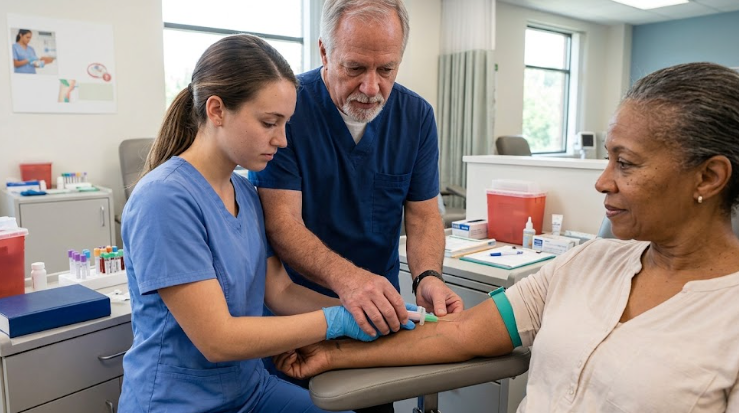
Knowing the correct steps is important, but collecting a specimen also requires patient communication, proper identification, appropriate technique, infection prevention, and careful specimen handling.
A refresher program may cover:
- Venipuncture technique
- Patient identification
- Specimen collection and handling
- Infection prevention
- Blood collection procedures
- Safety practices
- Patient communication
This type of training can be particularly useful for someone returning to clinical work after spending time away from phlebotomy.
Georgia does not have a separate state-issued phlebotomy license. Clinical laboratory regulations establish requirements for laboratories and the personnel who perform specimen collection and phlebotomy-related duties. Professionals who hold national certifications should also pay attention to the education and renewal requirements of their particular certifying organization.
For those looking for more practical preparation, additional phlebotomy clinical training and hands-on practice can complement CE.
CPR Recertification and BLS Recertification
CPR and BLS training are often required in healthcare, but they should not be treated as interchangeable with general CE. The certification you need depends on who is requiring it.
An employer may require a specific CPR or BLS credential. A school or healthcare organization may have its own approved provider requirements. A professional certification body may also specify which courses or certifications it accepts. That makes it important to identify the exact credential before signing up.
For CPR recertification, check whether your employer or organization requires a particular certification provider and whether a skills demonstration is part of the course.
The same applies to BLS recertification. Do not assume that every class advertised as BLS renewal will meet the requirements of your employer or organization.
It is also worth checking expiration dates well before a certification ends. Waiting until the last few days can create unnecessary problems if a course is full, documentation is delayed, or you discover that the wrong credential was completed
How Many Continuing Education Hours Do You Need in Georgia in 2026?
There is no single number of CE hours that applies to every healthcare professional in Georgia. That is one of the most important points to understand. The education you need can depend on your profession, credential, certification organization, employer, renewal cycle, and the type of training you complete.
Instead of asking, “How many CE hours does everyone in Georgia need?” start with a more useful question: What does my specific credential, employer, or certification organization require in 2026?
For CNAs
CNAs should review their current status and applicable renewal information through Georgia’s Nurse Aide Registry resources. Do not assume that completing a general healthcare course automatically satisfies a CNA renewal requirement.
For CMAs and Medication Aides
Medication aides should confirm their current certification status and applicable requirements through the appropriate Georgia Department of Community Health resources.
If you are preparing for medication aide renewal, find out what training and documentation are required before choosing a program.
For Phlebotomists
Georgia does not currently require a separate state phlebotomy license. Professionals who maintain national certifications should follow the renewal and CE requirements established by their certifying organization.
For more skill-focused information, see the guide on phlebotomy clinical training and hands-on practice.
For CPR and BLS
CPR and BLS requirements are generally determined by the organization requiring the certification. This could be an employer, school, healthcare organization, or credentialing body.
For CPR recertification, confirm the accepted credential before registering.
For BLS recertification, check the same details, particularly when your workplace requires certification from a specific provider.
How to Choose the Right CE Program
The shortest course is not automatically the best one. The cheapest option may not provide the practical training you actually need.
1. Match the Course to Your Profession
A CNA, medication aide, and phlebotomist have different responsibilities. Choose training that reflects your actual role.
2. Check Current Georgia Requirements
Requirements can change. Use the relevant Georgia agency or credentialing organization as your primary source before enrolling.
3. Look Beyond the Course Title
“Healthcare education” can describe many different types of training.
Read the curriculum and ask:
- What skills will I practice?
- Does the content apply to my role?
- Is assessment included?
- Is hands-on practice available?
- What documentation will I receive?
- Will this course satisfy my specific requirement?
4. Consider the Instructor
Healthcare training should be delivered by appropriately qualified instructors with relevant professional knowledge and practical experience.
5. Keep Your Documentation
Save certificates, transcripts, completion records, and other documents associated with your training.
This is especially important when preparing for medication aide renewal, CPR recertification, or BLS recertification.
6. Do Not Wait Until Renewal Week
Tracking your education throughout the renewal cycle gives you more time to identify gaps and complete appropriate training.
Continuing Education Programs at 1st Treasure Chara Centers
Another certificate is not necessarily another solution. The right training should match your role, your current skills, and the requirements you are trying to meet. Before enrolling, identify your goal, verify the applicable 2026 requirements, and choose a program that fits that goal.
1st Treasure Chara Centers offers healthcare education and training options for professionals and learners exploring CNA, CMA, medication aide, phlebotomy, CPR/BLS, and continuing education. Whether you need practical skill development or are preparing for CPR recertification, BLS recertification, or medication aide renewal, start by understanding exactly what you need.
Ready to take the next step? Explore the available programs and choose the training that fits your career goals.
Frequently Asked Questions
1. What is continuing education for healthcare workers?
Continuing education is simply additional training you take after completing your original healthcare program. It can help you brush up on skills you do not use every day, learn about updated procedures, or keep up with the requirements of your job or certification.
2. Can I take continuing education online in Georgia?
Some courses are offered online, but that does not mean every course will count toward your particular requirement. If you are taking a class for work, certification, or renewal, check with the organization that requires it before signing up.
3. How often should healthcare professionals take continuing education?
It depends on your profession and what credential you hold. Georgia does not have one CE-hour requirement that applies to every healthcare worker. Your employer, certification organization, or licensing authority may have its own rules, so check the requirements that apply to you.
4. What should I check before medication aide renewal?
First, check your current certification or registry status. Then find out what training is accepted, whether there are specific renewal requirements, and what documents you need to provide after completing the course. Taking a class simply because it is advertised as a renewal course can leave you with training that does not meet your actual requirement.
Latest Posts
August 13, 2024
Is the Role of a CNA the Same as That of a Nurse?
August 13, 2024
Phlebotomists: Vital Contributors to the Healthcare System

August 13, 2024