
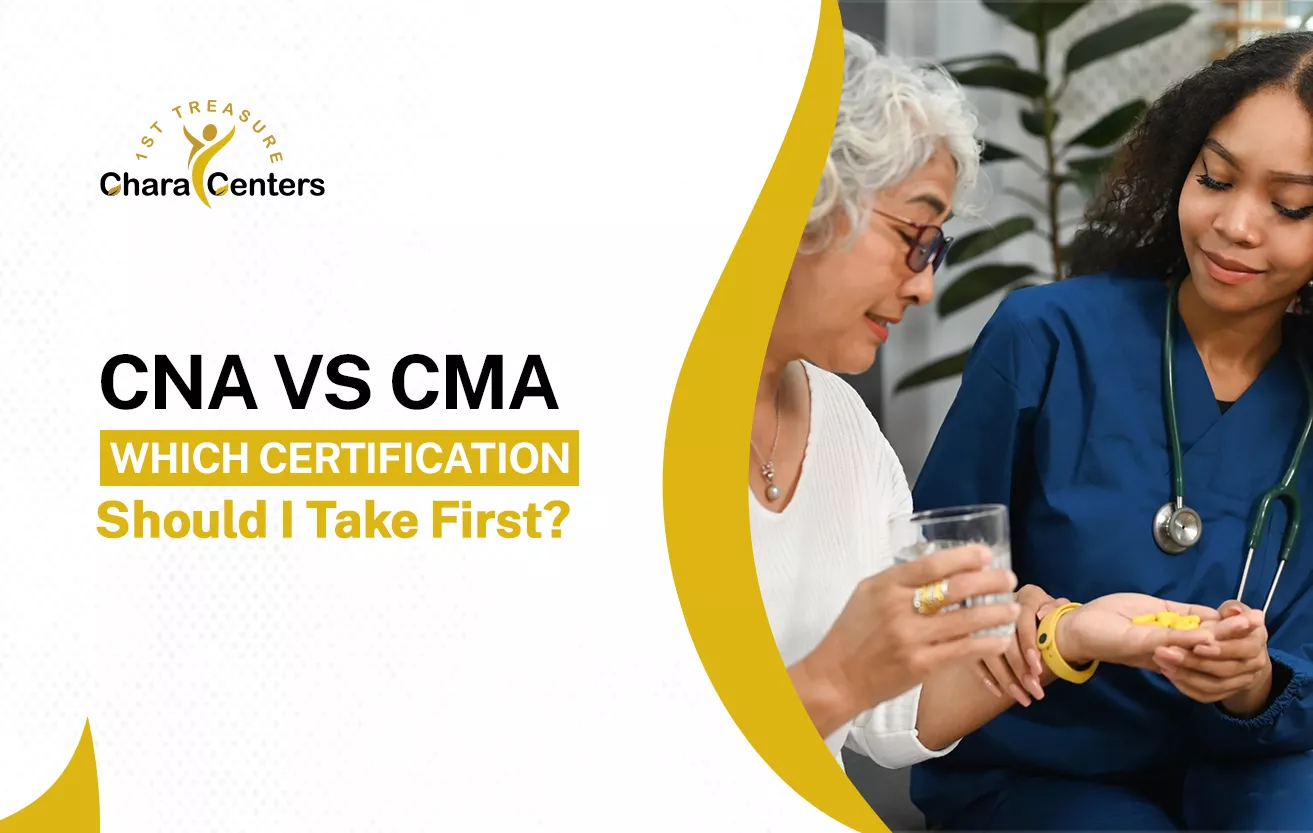
CNA vs CMA: Which Certification Should I Take First?
April 6, 2026
If you’ve ever searched “CNA vs CMA: which certification should I take first?”, it’s likely because you’re ready to start a healthcare career, but aren’t quite sure where to begin. Maybe you picture yourself helping patients every day, or building a career that actually grows over time. Or maybe you’re fresh out of high school, thinking about a career change, or just trying to figure out the fastest way to get into healthcare.
But while the titles sound similar, the day-to-day experience of a Certified Nursing Assistant and a Certified Medical Assistant can feel very different. If you’re trying to figure out which path fits you better, keep reading. In this guide, we’ll break down their responsibilities, work environments, and the challenges and advantages you might experience in both careers.
What is the Role of a CNA?
A Certified Nursing Assistant (CNA) spends most of the day helping patients with everyday care. These are the people who make sure patients are comfortable, safe, and supported during recovery or long-term care. CNAs are the caregivers patients see the most in most healthcare settings. They’re there throughout the day.
Duties of a CNA
A day in a CNA job includes:
- Helping patients get out of bed safely
- Assisting with bathing, dressing, and serving meals
- Checking vital signs like temperature and blood pressure
- Supporting movement or short walks
- Reporting health changes to nurses
These everyday tasks are the backbone of patient care. Because CNAs spend so much time at the bedside, they’re the first to spot small but important changes in a patient’s condition. That close attention can make a difference in how quickly someone gets the care they need.
You can also read our guide on CNA daily duties for more details.
CNA Work Settings
CNA jobs are most common in facilities that provide daily support or long-term care.
This includes:
- Skilled nursing facilities
- Hospitals
- Rehabilitation centers
- Long-term care homes
The work is physically active, and you’ll spend a lot of time moving, assisting patients, and working closely with nurses.
CNA Training
CNA programs are short and to the point. You’ll spend time in the classroom, get hands-on experience in a clinical setting, and then take a certification exam. Most people finish in about 4 to 12 weeks, so they can start working and gaining experience quickly. In just 4 to 12 weeks, CNA training can lead to CNA jobs in hospitals, giving new healthcare workers their first real experience.
For anyone eager to jump into healthcare, especially those who genuinely want to help patients, becoming a CNA is a perfect first step. From the moment you step onto the floor, you’re interacting directly with patients, learning how to care for them and understand their needs. It’s the kind of hands-on experience that not only teaches the skills you’ll use every day but also gives you a front-row view of what working in healthcare is truly like.
What is the Role of a Certified Medical Assistant?
While CNAs focus heavily on patient care, CMAs work in clinics or doctors’ offices. Their job blends clinical responsibilities with administrative work, making the role more varied throughout the day.
A CMA might start the morning by preparing exam rooms, checking patient records, or organizing appointments. Later, they may assist a physician during an examination or collect samples for lab testing.
Duties of a Certified Medical Assistant
The Duties of a CMA include:
- Recording patient medical histories
- Measuring vital signs
- Preparing patients for examinations
- Assisting doctors during procedures
- Scheduling appointments
- Managing medical records
Because CMAs work closely with physicians in outpatient settings, they get exposure to many aspects of medical practice. This role is ideal for people who enjoy both working with patients and handling organizational tasks within a clinic setting.
CMA Work Settings
A CMA certification usually leads to work in outpatient environments such as:
- Physician clinics
- Family practice offices
- Specialty medical centers
- Urgent care clinics
The pace can still be busy, but the setting is usually more structured compared to long-term care facilities.
CMA Training
CMA programs take longer because they cover more ground. You’ll learn medical terminology, anatomy and physiology, clinical skills, and office tasks like scheduling and patient records.
Depending on whether you choose a diploma or an associate degree, it can take 9 months to 2 years. It takes more time, but it prepares you for a bigger role in a medical office. For people who like the idea of working in a clinic and assisting physicians, taking a closer look at what you’ll learn in our CMA training program can be a good starting point.
CNA vs CMA: Key Differences at a Glance
| Key Differences | CNA | CMA |
|---|---|---|
| Main Focus | Direct patient care and daily support | Clinical assistance and administrative tasks |
| Workplaces | Hospitals, nursing homes, rehabilitation centers | Clinics, physician offices, outpatient facilities |
| Patient Interaction | Long and frequent contact with the same patients | Shorter visits with different patients throughout the day |
| Training Time | Usually 4-12 weeks | Around 9 months to 2 years |
| Career Direction | Leads toward nursing careers like LPN or RN | Can lead toward healthcare administration or specialized assisting roles |
Which Certification is Right for You?
Choosing between CNA and CMA depends on your personal goals. If you want the fastest route into healthcare and enjoy hands-on patient care, starting as a CNA feels like the right fit.
If you prefer a clinic environment and want a mix of clinical and administrative work, becoming a Certified Medical Assistant might be the better option. Think about where you see yourself working every day. Do you picture helping patients recover in a hospital room or assisting a physician during clinic appointments? The answer points toward the certification that will suit you best.
If you’re still unsure which path fits you best, talking with a training advisor at 1st Treasure Chara Centers can help you figure out which program makes sense for you. We can guide you toward the program that matches your goals and timeline.
Why You Should Consider a CNA Training Program First
For beginners, enrolling in the CNA training program is the fastest and easiest way to get into healthcare. The training is shorter, so you can start gaining practical hands-on experience quickly. Healthcare courses often come with a lot of technical training and long timelines, which can feel overwhelming for beginners.
However, CNA training is one of the programs that’s shorter and more straightforward compared to others like CMA. For career changers, recent graduates, or anyone eager to step into healthcare quickly, CNA programs offer a fast, practical path to start working with patients and gaining real-world experience. This experience helps you decide whether they want to move further into nursing, medical assisting, or other healthcare roles.
For more up-to-date information, check out the BLS Nursing Assistants CNA job outlook and salaries.
Frequently Asked Questions About CNA vs CMA
Q. Which one pays more, CNA or CMA?
In most cases, CMAs earn a bit more. CNAs usually make around $28K–$38K a year, while CMAs earn $35K–$45K, depending on experience and location.
Q. Is CNA work more difficult than CMA work?
CNA jobs tend to be more physically demanding since they involve helping patients move, bathe, or get around. CMA work is less physical but involves more medical and office tasks.
Taking the Next Step in Your Healthcare Career
Both CNAs and medical assistants play an important role in healthcare, each with their own strengths. If you’re drawn to hands-on lab work, phlebotomy is a great path. If you’re looking for broader skills and more flexibility, medical assisting can open even more doors. Whichever path you choose, the right training sets you up for a strong, rewarding healthcare career.
If you’re ready to take that first step, join 1st Treasure Character Centers today and see how our healthcare training programs prepare you for clinical and administrative roles. Starting now means you’ll be one step closer to a rewarding healthcare career.
Q. Can someone start as a CNA and later become a CMA?
Yes, that’s actually pretty common. Many people begin as CNAs to gain patient-care experience and later move into CMA training.
Q. Which certification can you finish faster?
CNA training is much shorter. Most programs take 4–12 weeks, while CMA programs usually take 9 months to 2 years.
Q. Do CNAs and CMAs have the same certification exam?
No. Each role has its own exam that focuses on the skills needed for that specific job.
Latest Posts
August 13, 2024
Is the Role of a CNA the Same as That of a Nurse?

August 13, 2024
Phlebotomists: Vital Contributors to the Healthcare System

August 13, 2024