Short Medical Courses That Can Lead to Healthcare Jobs Fast
May 26, 2026
A lot of people want to work in healthcare, but they think they have to spend years in medical school or pay for an expensive healthcare degree just to get started. That thought alone stops many students before they even try. Schooling for healthcare can feel too long, too costly, and honestly a bit overwhelming, especially if you’re changing careers or just want a faster way to start working in the healthcare field.
But that’s not the only path. Short medical courses and short medical training programs offer a faster route into the best entry-level healthcare career in just a few weeks or months. In the USA, many certification programs take just a few months and can lead you straight into entry-level healthcare jobs much sooner than most people expect.
Best Short Medical Courses That Can Lead to Healthcare Jobs Fast
Here’s a clear breakdown of the most popular and in-demand medical certifications that pay well and require short medical courses, along with what each one involves and what you can expect to earn.
| Factors | Online Programs | In-Person Programs |
|---|---|---|
| Average Cost | $500 – $1,500 | $1,000 – $3,500+ |
| Best For | Working adults, flexible schedules | Hands-on learners, first-timers |
| Pros | Lower tuition, self-paced, flexible | More clinical access, direct instructor support |
| Cons | Clinical hours still required separately | Less flexibility, higher cost, commuting |
These roles represent some of the best healthcare jobs with short training. According to the U.S. Bureau of Labor Statistics, healthcare is one of the fastest-growing job sectors in the country, with strong demand for support roles like nursing assistants, medical assistants, and technicians.
Detailed Breakdown: What Each Short Medical Course Actually Involves
Here’s a simple breakdown of the healthcare certification programs involved and how it prepares you for real healthcare work.
Certified Nursing Assistant (CNA)
CNA training is one of the most direct paths into hands-on patient care. In 4 to 12 weeks, you learn how to assist patients with daily activities like bathing, eating, and moving, how to monitor vital signs, and how to support the nursing staff.
It’s a physically active, emotionally rewarding role. You work directly with patients in hospitals, nursing homes, and assisted living facilities. The job is demanding, but so is the satisfaction that comes with it.
CNA certification is also one of the most widely recognized healthcare credentials in the USA. Every state requires CNAs to be certified, which means your qualification carries real weight with employers everywhere.
For anyone who wants to genuinely connect with patients and work at the center of care, doing a CNA training course is the fastest way to do exactly that.
Certified Medication Aide (CMA)
Once you’ve built some foundational experience, or if you want to step into a slightly more advanced role from the beginning, CMA certification is the natural next step.
CMA training, which takes 8 to 16 weeks, teaches you how to properly administer medications, understand dosage requirements, follow safety protocols, and document patient medication records. It’s a role that requires precision and attentiveness, and healthcare facilities depend heavily on CMAs to support their patient care operations.
The salary range is higher than that of entry-level CNA positions, and because the skill set is more specialized, CMAs often find it easier to secure stable, consistent employment.
Phlebotomy Technician
If you’re interested in a more technical, clinical role that doesn’t require direct long-term patient care, phlebotomy is worth a serious look.
Phlebotomists are the professionals responsible for drawing blood from patients for medical testing. It sounds simple, but the skill involves precision technique, knowledge of proper sample handling and labeling, understanding of infection control procedures, and strong patient communication skills, because a lot of people are nervous about needles.
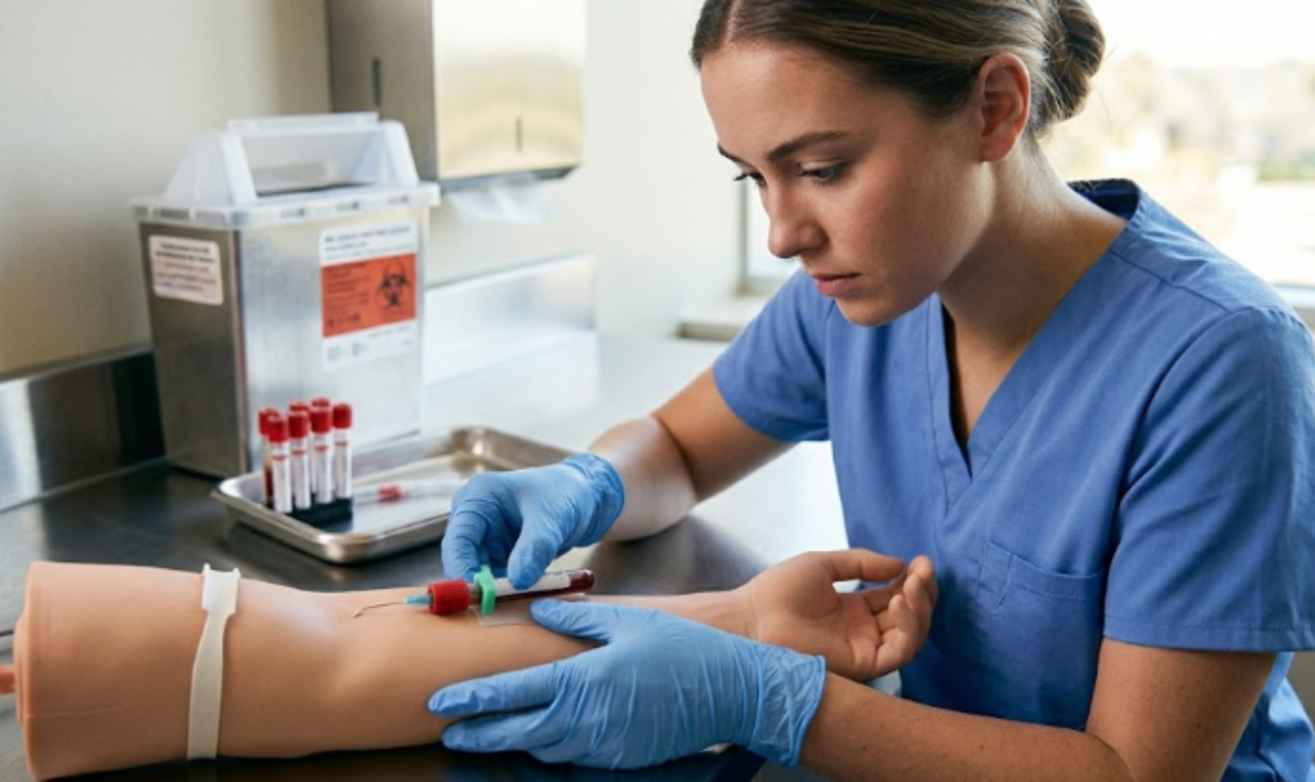
Phlebotomy programs can be completed in as little as two to six weeks. Given that hospitals, diagnostic labs, blood banks, and clinics consistently need phlebotomists, this is one of the fastest short medical courses to complete and one of the most employable certifications in the country.
EKG Technician
The EKG technician is one of the most stable and quick healthcare certifications that pay well. They operate the electrocardiogram equipment that records heart activity. Cardiologists and physicians rely on this data to diagnose heart conditions and monitor patients’ cardiac health.
EKG technician training takes four to eight weeks. You’ll learn how to properly attach electrodes, operate the equipment, record accurate readings, and understand basic cardiac terminology.
It’s a technical role with a relatively short training period, and with heart disease remaining one of the leading health concerns in the USA, EKG technicians remain consistently in demand.
Medical Assistant
Medical assistant programs take slightly longer, typically nine to twelve months, but they prepare you for a broader range of responsibilities than most single-skill certifications. Certified medical assistants perform both administrative tasks (scheduling, patient records, insurance forms) and clinical duties (taking vital signs, preparing patients for exams, assisting physicians).
It’s one of the most versatile short medical training programs. If you like variety and want to work across both the front and back of a medical office, medical assistant training gives you that flexibility.
Which Short Medical Course Fits Your Career Goals?
This is where a lot of people get stuck, not because there aren’t good options, but because there are too many of them. Here’s a simple way to think about it based on what matters most to you.
Work Directly With Patients
CNA and Patient Care Technician training are your fastest paths into hands-on care. You’ll be working with patients every shift, building relationships, and playing a direct role in their well-being.
If you want that experience but also want a bit more responsibility, CMA training adds the medication administration component and tends to come with a slightly higher salary. They both are strong entry points into healthcare jobs with short training requirements.
Fast Certification With Strong Job Placement
Phlebotomy and EKG technician programs are among the shortest in duration and among the highest in consistent employment demand. If your goal is to be working in healthcare as quickly as possible, these are two of the most reliable routes.
Non-Clinical or Office-Based Healthcare Role
Medical billing and coding is the standout option here. It’s a role that’s deeply important to the healthcare system but doesn’t require patient contact. Many experienced billers and coders work remotely, which adds flexibility that most clinical roles don’t offer.
Where to Enroll in Short Medical Courses in the USA
When you’re choosing a program for short medical courses, here are a few things you should always check:
- Make sure the program is state-approved and properly accredited for your certification
- Look for hands-on clinical training. Hands-on training directly impacts employability and certification success.
- Check that instructors actually have real healthcare experience, not only academic backgrounds
- See if the school offers job support or employer connections after completion
- Confirm there is a clear pathway to certification and licensing exams
Across the USA, the best options usually come from Allied Health Training centers and vocational schools that specialize in healthcare certification programs. These programs are built with one goal in mind: to help you complete your short medical courses, get certified, and move into the workforce with real skills employers are looking for.
Important Note: Short medical training programs are the fastest bridge between beginners and stable healthcare employment.
Final Thoughts: The Best Time to Start Is Now
Healthcare doesn’t wait, and neither should you. You don’t need a long degree or years of planning to get started; you just need the right short medical courses and healthcare certification programs that match your goals. Every month you delay is another month of lost experience, lost income, and missed opportunities in a growing industry that continues to hire across the USA.
If you’re serious about changing your future, don’t wait for the “perfect time”, because it won’t come. Take your first step today and explore hands-on training programs at 1st Treasure Chara Centers before enrollment closes.
Frequently Asked Questions About Short Medical Courses
What is the shortest course in the medical field?
Phlebotomy. Most programs wrap up in two to six weeks, and you come out certified and ready to work in a real clinical setting. If you just need a foundational credential, CPR can be done in a single day, but phlebotomy is where an actual career starts.
What is the quickest medical course?
Phlebotomy training is hard to beat. Some phlebotomy training programs finish in as little as two weeks. CNA training lasts from four to twelve weeks. Both are fully hands-on and recognized by employers across the USA.
What is the shortest schooling for a medical career?
A phlebotomy or CNA program. No degree required, no years of prerequisites. You train, you certify, you work. Most people are employed in healthcare within weeks of finishing.
What is the quickest medical certification?
For a career-level credential, phlebotomy. For a baseline requirement, CPR takes just one day. Most healthcare jobs want both, so starting with CPR and following it with phlebotomy or CNA training puts you ahead of the majority of applicants.
Latest Posts
August 13, 2024
Is the Role of a CNA the Same as That of a Nurse?
August 13, 2024
Phlebotomists: Vital Contributors to the Healthcare System

August 13, 2024