
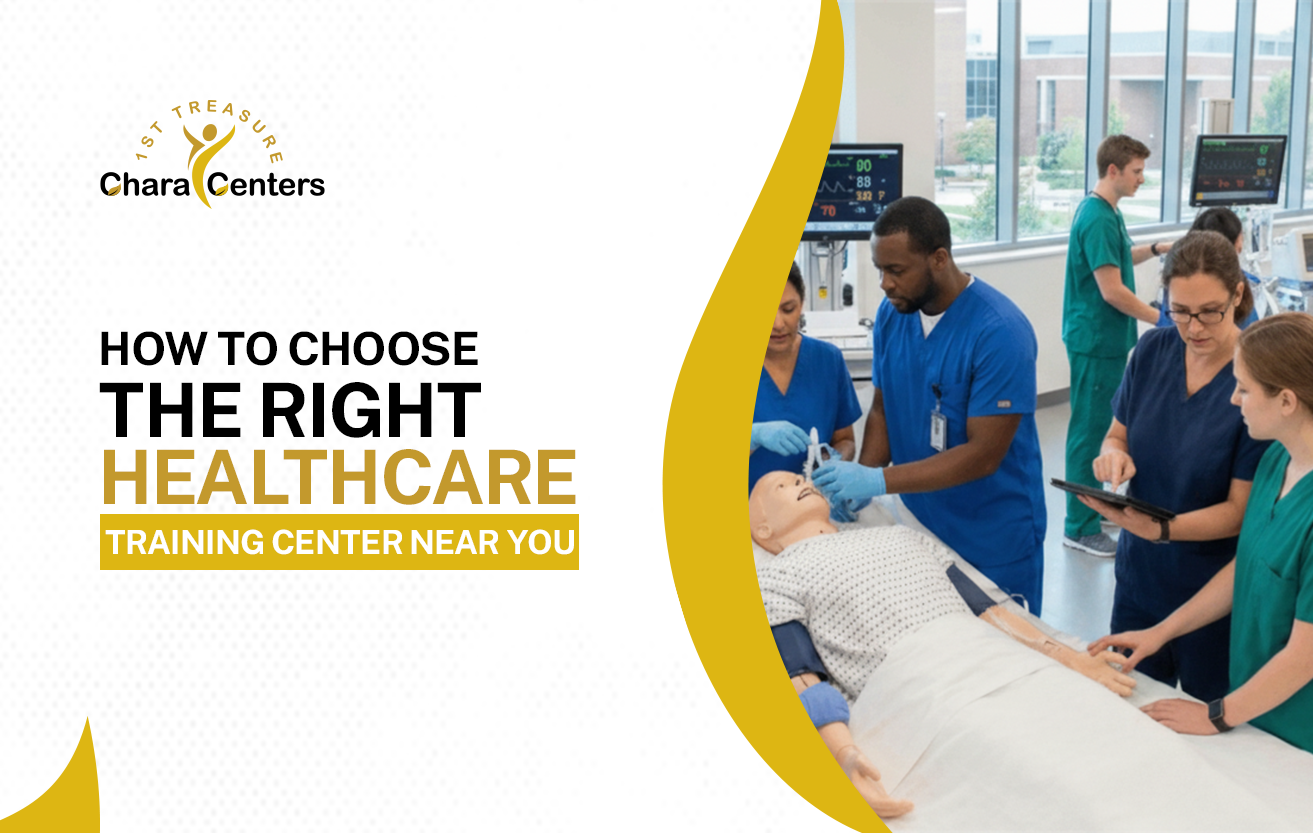
How to Choose the Right Healthcare Training Center Near You
April 27, 2026
Many students want to enter healthcare but get stuck at the very first step. Because every training center looks similar, it becomes hard to tell which one is actually worth it. This confusion leads to rushed decisions, and later, students realize the program doesn’t match their goals or learning style.
The solution starts with clarity. The right healthcare training center is not just the nearest or cheapest option. It is the one that fits your strengths, your time commitment, and your career direction. When you first understand what you need from your training, it becomes much easier to choose a program that actually prepares you for real healthcare work instead of just giving you a certificate.
Define Your Career Goals First
Before choosing the Right Healthcare Training Center, you need a direction. Many students rush this step and later realize the program they chose doesn’t match their interests or long-term plans.
So, don’t rush, just take a moment to get specific about what you want your healthcare path to look like:
- Work Preference: Decide if you’re more interested in direct patient care (like working at bedside or in clinics) or supportive/technical roles (like lab work, billing, or diagnostics).
- Time Commitment: Some programs take a few weeks, others take months. Be honest about how quickly you want to start working versus how much training you’re willing to complete.
- Long-Term Goals: Think ahead. Do you want this as an entry point into nursing, or a stable, long-term role in allied health?
- Learning Style: Some people learn better through repetition in labs, others need structured classroom teaching, and many need a blend of both to feel confident.
When you define these career goals clearly, choosing the right healthcare training program becomes easier.
Key Factors for Selecting a Healthcare Training Center
Choosing the best healthcare training program becomes easier when you know exactly what factors to look for in a healthcare center. These factors include:
Accreditation and Reputation
Accreditation is one of the first things to check because it tells you whether the training program is actually recognized by the healthcare system or just offers basic training. Always go for schools of healthcare approved by organizations such as the Accrediting Bureau of Health Education Schools or the Commission on Accreditation of Allied Health Education Programs. Because their healthcare programs are reviewed for training standards, clinical requirements, and instructor quality.
Before enrolling:
- Check whether the training program is nationally or state-recognized
- Take feedback from past students about the daily training experience
- Check whether the program is accepted in your target job market or not
Many healthcare students only focus on time duration, but employers usually care more about where you trained and how well that training holds up in real healthcare settings.
Hands-On Training Opportunities

This is where the real difference shows. A program can look strong on the internet, but if students don’t get enough practice, they often struggle during their first healthcare job.
A good healthcare training usually focuses on:
- Repeated practice in labs, not just one-time demonstrations
- Exposure to real or simulated patient care situations
- Supervised externships where mistakes can be corrected safely
- Step-by-step skill building instead of rushed modules
Students who spend time actually performing tasks, taking vitals, assisting patients, and handling equipment tend to adjust much faster when they enter hospitals or clinics for the first time.
Cost and Financial Aid
Cost is one of those things students check at first. It’s not just tuition fees, but also exam fees, uniforms, books, and sometimes even background checks or lab supplies.
A clear breakdown usually looks like this:
| Program | Typical Tuition Range | Certification / Exam Fees | Duration |
| CNA | $800 – $2,000 | $100 – $300 | 4–12 weeks |
| Phlebotomy Technician | $1,000 – $3,000 | $100 – $250 | 4–8 weeks |
| Medical Assistant | $3,000 – $15,000 | $200 – $500 | 8–12 months |
| CPR / BLS | $50 – $150 | Included | 1 day |
| EMT | $1,000 – $3,500 | $150 – $300 | 3–6 months |
| Medical Billing & Coding | $1,500 – $6,000 | $150 – $400 | 3–6 months |
What really matters is how transparent the school is from the start. A good training center doesn’t hide costs or surprise you later; it breaks everything down clearly so you can plan ahead.
Pro-Tip: When reviewing healthcare training institute fees, ask if the price includes the mandatory GAPS fingerprinting ($80–$100) or the Credentia NNAAP exam fee ($130). Some programs, like those offered by 1st Treasure Chara Centers, guide these out-of-pocket costs to ensure there are no surprises on your path to the Georgia Nurse Aide Registry.
Curriculum and Faculty
A strong healthcare training program is usually built on an updated healthcare course curriculum and facilities, supported by experienced instructors who have experience in healthcare settings.
A well-structured program usually includes:
- Curriculum that matches current healthcare practices
- Instructors with real clinical or hospital experience
- Clear explanation of “why” behind each skill, not just steps
- Support when students struggle with practical tasks
- Guidance based on real patient-care situations
This is the stage where the gap between average and strong training becomes very clear. Some students just memorize steps, while others build real confidence because they understand how and why those steps are used in patient care situations.
Career Services and Job Placement
Completing training is only the first step. The real challenge for most students is turning that certificate into a job. In healthcare, entry-level roles are available, but each one has different training time, responsibilities, and job demand.
Here’s a simple breakdown of common entry-level healthcare careers so you can clearly see the differences:
| Healthcare Role | Median Annual Salary (US) | Job Growth Outlook (BLS) | Typical Certification Time | Employment Outlook |
| CNA (Certified Nursing Assistant) | ~$38,130 | ~4% | 4–12 weeks | High demand in hospitals & long-term care facilities |
| Phlebotomy Technician | ~$43,660 | ~6% | 4–8 weeks | Strong demand in labs, hospitals, and diagnostic centers |
| Home Health Aide | ~$34,900 | ~17% | 4–12 weeks | Fastest growth in the home care sector |
| EMT (Emergency Medical Technician) | ~$43,100 | ~6% | 3–6 months | Key role in emergency response systems |
| Medical Billing & Coding | ~$50,250 | ~7% | 3–6 months | Steady demand in hospitals & insurance systems |
This makes it easier to understand that some careers get you working in just a few weeks, while others take longer but may offer different types of work environments.
If you are unsure which path to choose, focus on two things: how quickly you want to start working and what kind of healthcare setting you prefer. If you are deciding between CNA and CMA as a starting point, comparing CNA vs CMA can help you understand which one fits your goals better.
Which Medical Career is the Easiest to Start?
When people ask about the “easiest” medical career, they’re usually talking about programs that are short, focused, and don’t require years of schooling to get started. “Easy” doesn’t mean effortless; it just means the path is more direct. Actually, the skills that are easier to build at the beginning of your career.
Here are a few entry-level options that are considered easier to start:
- Home Health Aide: This is seen as one of the easiest entry points because the training is short and focused on basic care. They handle tasks like helping patients with daily activities, mobility, and comfort. It doesn’t require complex technical procedures, which is what makes it easier for beginners to adjust.
- Certified Nursing Assistant (CNA): This program is considered manageable because it teaches clear, step-by-step skills. The duties of a CNA include taking vital signs and assisting nurses. The structure is straightforward, and students get hands-on practice early, which helps build confidence quickly.
- Phlebotomy Technician: Many students find this easier because the role is very focused. Instead of learning a wide range of medical tasks, they mainly learn one core skill, which is drawing blood and handling lab samples through repeated practice.
In reality, “easy” in healthcare usually means clear training, short duration, and simple skill progression, not a lack of responsibility. The best choice still depends on what feels comfortable for you and what kind of healthcare work you can see yourself doing every day.
Get Started With 1st Treasure Chara Centers
Starting a career in healthcare is about building readiness for patient care from day one. In healthcare settings, what truly matters is how confidently and correctly you can apply what you’ve learned when situations become serious and time-sensitive.
That’s why focusing on the Right Healthcare Training Center near you and choosing accredited healthcare training programs makes such a difference. A well-structured institute like 1st Treasure Chara Centers helps turn classroom learning into practical skills through proper guidance and hands-on experience, so you’re not just studying healthcare, you’re actually preparing to work in it with confidence.
Take the next step today. Explore healthcare training options, compare quality, and enroll in a program that prepares you for healthcare work.
Frequently Asked Questions
What is the best way to find the Right Healthcare Training Center near you?
Look for an accredited program with strong clinical training, employer recognition, and high certification pass rates in your state.
What accreditation should a healthcare training institution have in the US?
Choose programs approved by ABHES or CAAHEP, as they meet US healthcare education standards and support certification eligibility.
How to choose healthcare training institute?
Compare state approval, hands-on clinical hours, curriculum quality, job placement support, and total program cost.
What affects healthcare training institute fees and financial aid in the US?
Costs depend on program type, state, and duration. Many institutes offer federal aid, payment plans, or scholarships for eligible students.
Latest Posts
August 13, 2024
Is the Role of a CNA the Same as That of a Nurse?
August 13, 2024
Phlebotomists: Vital Contributors to the Healthcare System

August 13, 2024