
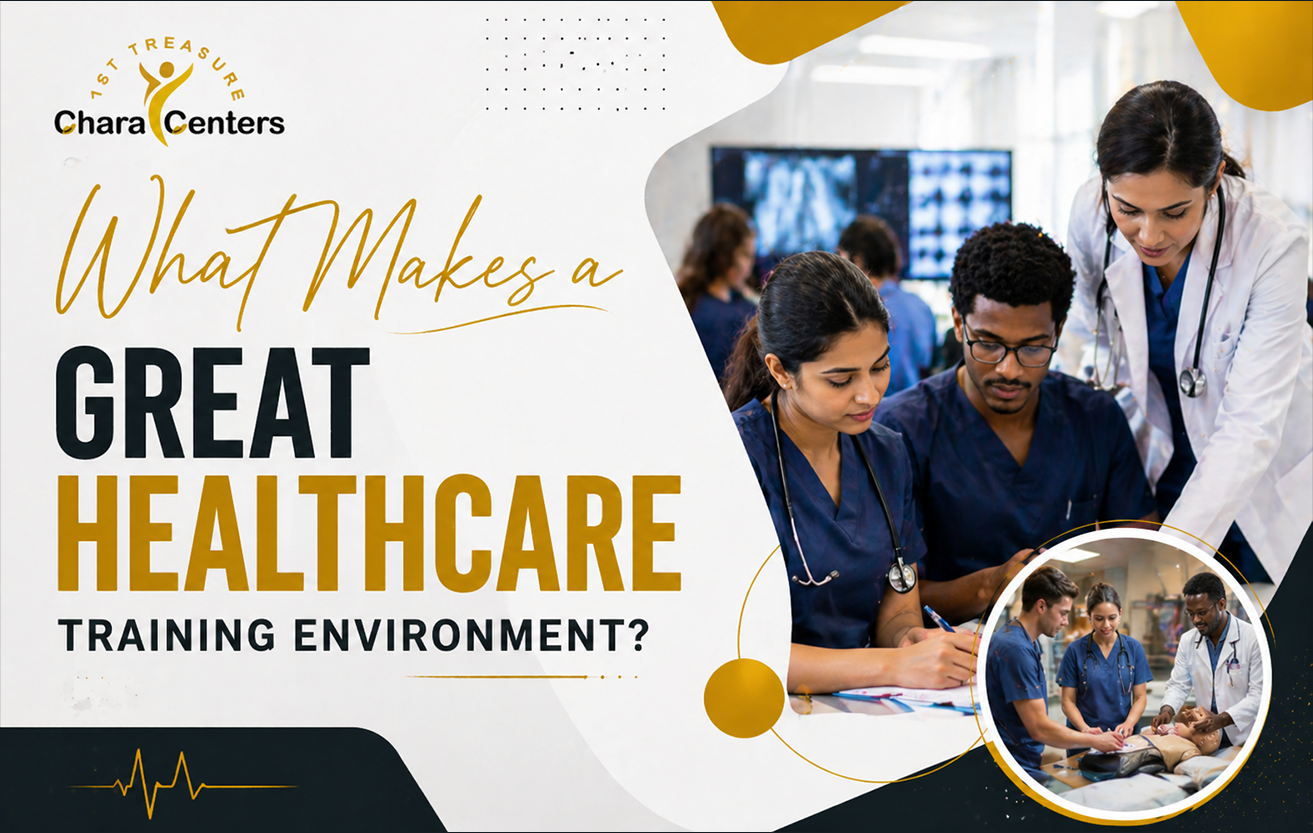
5 Best Practices for Healthcare Staff Training
May 4, 2026
Effective healthcare staff training is what keeps hospitals running safely and smoothly. However, in reality, many healthcare mistakes still occur because training is not always consistent or up to date. In fact, a widely cited estimate from Johns Hopkins University based on earlier data suggests that preventable medical errors contribute to over 250,000 deaths in the United States, although the exact numbers can vary. But this shows how critical proper healthcare employee training really is.
At the same time, studies also show that when healthcare teams are properly trained and supported, patient health improves and errors decrease. This is why training and development in healthcare organizations is becoming a top priority for hospitals that want to build safer systems and a stronger, positive care environment.
Importance of Healthcare Staff Training for Patient Safety and Performance
Strong healthcare training directly affects how safely patients are cared for every day. In healthcare settings, important decisions are made quickly, and even small gaps in knowledge or communication can lead to serious outcomes that can harm patients.
This is why consistent healthcare employee training is essential for building confidence, reducing risk, and supporting safer patient care at every level.
When healthcare staff receive proper training, the impact shows in everyday care and performance:
- Fewer medical errors and safer patient care
- More confidence in real clinical situations
- Better teamwork and communication
- Faster, clearer decisions under pressure
- A calmer, more positive care environment
Ultimately, effective healthcare staff training builds safer hospitals, more confident teams, and better experiences for patients who depend on care every day.
5 Best Practices for Healthcare Staff Training
Here are five best practices for healthcare employees’ training:
1. Conduct a Data-Driven Skills Gap Assessment
Good healthcare employee training always starts with understanding what people actually need, without any assumptions. In healthcare settings, leaders look at performance reviews, patient outcomes, and honest feedback from staff to see where a gap exists.
This helps training and development in healthcare organizations stay practical and focused, so teams are trained on the weak areas that truly affect daily care.
2. Align Training with Clinical and Organizational Goals
Healthcare employee training works best when it clearly connects to what the hospital is trying to achieve, whether that’s safer patient care, fewer errors, or smoother workflows.
For example, infection control training supports patient safety, while EHR and communication training improve how teams work together. When hospital staff training is aligned with real goals, it becomes easier to see what’s actually improving in day-to-day operations.
3. Implement Blended and Flexible Learning Systems
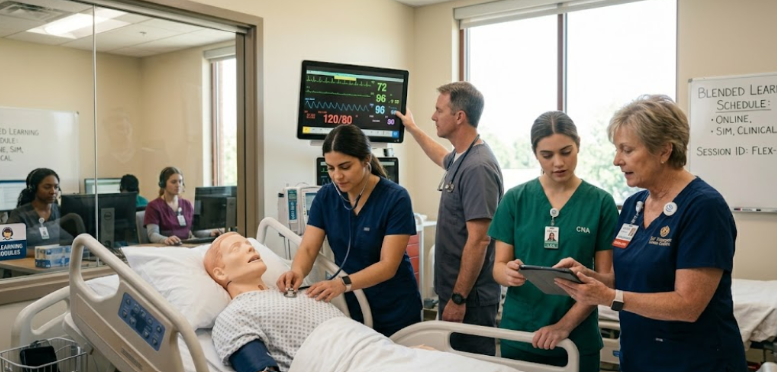
In modern learning and development healthcare approaches, training isn’t limited to classrooms anymore. It usually mixes online learning, hands-on practice, simulations, and real on-the-job experience.
This makes it easier for busy healthcare teams working different shifts to actually complete training without disrupting patient care. It also helps healthcare employees’ training feel more practical, because people learn and apply skills at the same time.
4. Strengthen Role-Based Training and Accountability
Not every healthcare role needs the same type of training, and that’s where many programs go wrong. Nurses, medical assistants, administrative staff, and support teams all handle very different responsibilities, so their healthcare employee training should reflect that.
When training is role-specific, people feel more confident in their work, make fewer mistakes, and contribute better to a more stable and positive care environment.
5. Build Continuous Learning and Feedback Loops
The strongest training and development in healthcare organizations don’t stop after onboarding. Healthcare changes fast, so training has to keep going in small updates, refresher sessions, and simple learning improvements over time.
When staff are regularly supported and given feedback, healthcare training becomes part of the work culture instead of a one-time task, and that’s when real improvement starts to show in patient care and team performance.
Tip: Continuous learning also helps staff grow in their careers. Many professionals stay updated through top continuing education courses for career growth.
Role-Specific Training in Healthcare Employee Development
In real hospital settings, training only works when it actually matches what people do in their day-to-day roles. That’s why strong healthcare training is built around real responsibilities, not just theory.
When organizations follow industry standards in healthcare organizations and use evidence-based training methods, staff don’t just “learn”, they actually know how to respond when it matters most.
Role-Specific Training Breakdown
Key Takeaway: Many people get confused and start wondering: Is the role of a CNA the same as that of a nurse? The answer is a big no. CNAs focus on basic patient care like hygiene, feeding, and mobility, while nurses handle clinical decisions, medications, and patient assessments. Both roles work closely together.
How Structured Healthcare Training Programs Support Real Clinical Readiness
In healthcare settings, healthcare staff training only works when it prepares students for what they’ll actually face on their job. That’s why the focus should be on simple and practical learning that feels close to real patient care, so learners can build confidence before stepping into clinical environments.
At 1st Treasure Chara Centers, we focus on hands-on preparation that supports real healthcare roles like CNA, CMA, phlebotomy, and CPR. We don’t just teach the techniques; we actually guide learners on how to use those healthcare professional skills in emergencies. So, they can build confidence step by step and feel more comfortable working in healthcare environments.
- Training is based on real hospital and clinic situations
- Covers essential roles like CNA, CMA, phlebotomy, and CPR
- Helps build confidence step by step through practice
- Gives a clear idea of what working in healthcare actually feels like
- Improves communication and teamwork in simple, real-life ways
- Follows healthcare industry expectations and up-to-date course
When training and development in healthcare organizations are done properly, it feels like preparing for real life. And slowly, that’s what helps build more confident people and a calmer, more positive care environment where both staff and patients feel more supported.
Final Thoughts
At the end of the day, good healthcare staff training is really about preparing people for real emergencies. When learning feels practical, simple, and connected to actual work, it naturally builds confidence, better teamwork, and safer patient care.
In healthcare roles like CNA, CMA, phlebotomy, CPR support, and other clinical and administrative positions, what matters most is how confidently someone can handle emergencies.
If you’re looking to build a strong foundation in these healthcare roles, explore 1st Treasure Chara Centers and see how structured, hands-on healthcare training can help you get started with confidence.
FAQs
What does healthcare employee training mean?
It means teaching healthcare workers how to do their jobs properly. This includes patient care, safety steps, and communication skills.
Why is healthcare training important in hospitals?
Because patient care needs to be safe and accurate. Good training helps reduce mistakes and builds confidence in staff.
What is role-based training in healthcare?
It means different roles get different training. Nurses, CNAs, and admin staff don’t all do the same work, so they shouldn’t learn the same way.
How does healthcare employee training improve patient care?
Trained staff work faster and with fewer errors. They also communicate better with patients and teams. That leads to safer care.
How often should healthcare employee training be updated?
It should be ongoing. Not one-time. Healthcare changes often, so training needs to keep up.
Latest Posts
August 13, 2024
Is the Role of a CNA the Same as That of a Nurse?
August 13, 2024
Phlebotomists: Vital Contributors to the Healthcare System
August 13, 2024